
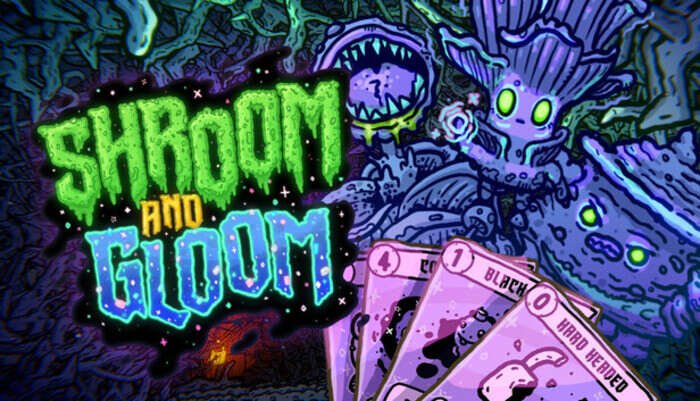
Shroom and Gloom is a strange and stylish first-person roguelike deckbuilding game that mixes turn-based combat with exploration, card upgrades, and a world filled with monstrous mushrooms. Developed by Team Lazerbeam and published by Devolver Digital, the game takes the familiar idea of a card battler and places it inside a surreal first-person dungeon environment.
What makes the game stand out is that players don’t simply build one deck. Shroom and Gloom uses a double-deckbuilding system, giving you separate decks for combat and exploration. Your combat cards help you survive encounters, while exploration cards let you interact with the dungeon, discover secrets, modify your cards, and unlock new possibilities.
What Is Shroom and Gloom?
Shroom and Gloom is a single-player roguelike deckbuilder where you explore underground tunnels and fight strange mushroom enemies using cards.
The game combines several genres that normally feel very different from each other. It has the strategic decision-making of a card game, the progression and replayability of a roguelike, and the exploration perspective of a first-person adventure.
Instead of simply moving from one menu to another between battles, you physically explore hand-drawn environments. You can discover points of interest, find useful resources, encounter enemies, and make decisions about where to go next.
Game Information
- Title: Shroom and Gloom
- Developer: Team Lazerbeam
- Publisher: Devolver Digital
- Release Date: September 10, 2026
- Genre: Adventure, Indie, Roguelike, Deckbuilder, Turn-Based Combat
- Game Mode: Single-player
- Platforms: Windows PC and macOS
- Release Type: Early Access
- Steam Features: Achievements, Steam Cloud, Family Sharing
Story and Setting
Shroom and Gloom takes place in a strange underground world known simply as The Gloom.
Instead of exploring a realistic dungeon filled with ordinary monsters, players enter a surreal environment dominated by mushrooms, strange creatures, unusual objects, and bizarre visual designs.
The setting has a dark fantasy feel, but it is also playful and colorful. The fungal enemies are not presented like traditional horror monsters. They are strange, exaggerated, and often visually ridiculous, which gives the game a personality of its own.
Your journey takes you deeper into this world while you search for powerful cards, abilities, and combinations. The deeper you go, the more dangerous encounters become, making the journey toward the heart of The Gloom increasingly challenging.
The story is not the only reason to explore. Much of the enjoyment comes from discovering what the next tunnel contains and finding ways to make your deck stronger before the next major encounter.
Double-Deckbuilding Gameplay
Your combat deck is used when fighting enemies. It contains the attacks, abilities, and other cards needed to survive turn-based battles.
Your exploration deck works differently. These cards help you interact with the dungeon and can provide tools for navigating the environment, modifying cards, unlocking abilities, and discovering opportunities outside combat.
Having two decks creates an interesting strategic layer because you cannot think only about your next fight. You also need to consider how your exploration choices affect the overall run.
A powerful combat deck may not be enough if you ignore exploration. Likewise, strong exploration tools are less useful if your combat deck cannot handle increasingly dangerous enemies. Secret Saga: Xamadeon Stone
Combat System
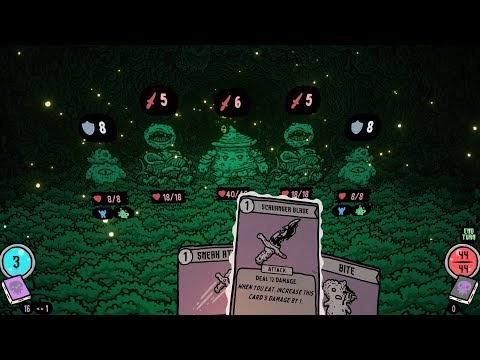
Combat is turn-based, so players have time to think about their decisions instead of relying on quick reflexes.
When an enemy appears, you use cards from your combat deck to attack, manipulate enemies, and build combinations.
The game’s design encourages experimentation. Rather than simply choosing the strongest attack every turn, players can create combinations that make individual cards much more powerful.
The developers specifically emphasize the game’s mega-combo system, where cards can be grown and modified into much stronger versions.
This means that a card that looks ordinary at the beginning of a run can eventually become an important part of a powerful strategy.
Card Growth and Upgrades
Card progression is one of the most interesting systems in Shroom and Gloom.
Players can modify their cards and make them stronger as they progress. The game allows cards to grow into more powerful versions, creating opportunities to develop unusual builds.
This system gives players a reason to experiment instead of automatically replacing every weaker card.
A basic starting card can potentially become a powerful attack if you invest in it correctly. On the other hand, rare cards can also be modified into extremely strong weapons.
The developers describe these upgrades as a way to create potentially game-breaking combinations, which fits perfectly with the experimental nature of a roguelike deckbuilder.
Eating Your Enemies
One of the strangest features in Shroom and Gloom is the ability to eat enemies.
Instead of simply blocking incoming attacks, the game encourages players to deal with enemies in more unusual ways. You can season, skewer, and roast fungal creatures before eating them.
Eating enemies can restore lost health, giving the mechanic an actual strategic purpose rather than being purely a joke.
The system can also go even further. Roasted enemies can be placed into a pot to create soups that provide powerful effects.
This unusual cooking mechanic fits the game’s bizarre world while also giving combat another layer of strategy.
Exploration
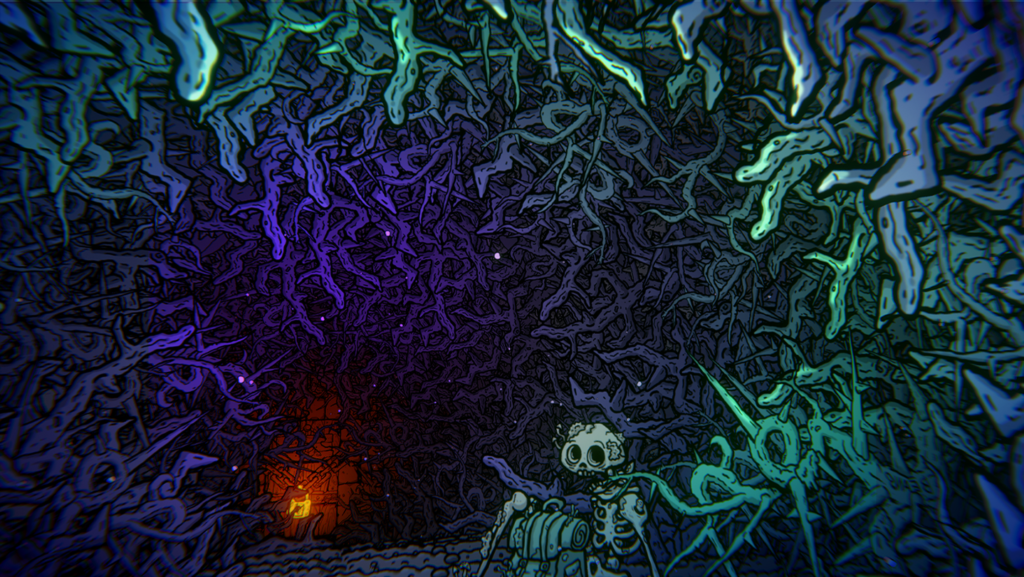
Exploration is where the first-person perspective becomes especially important.
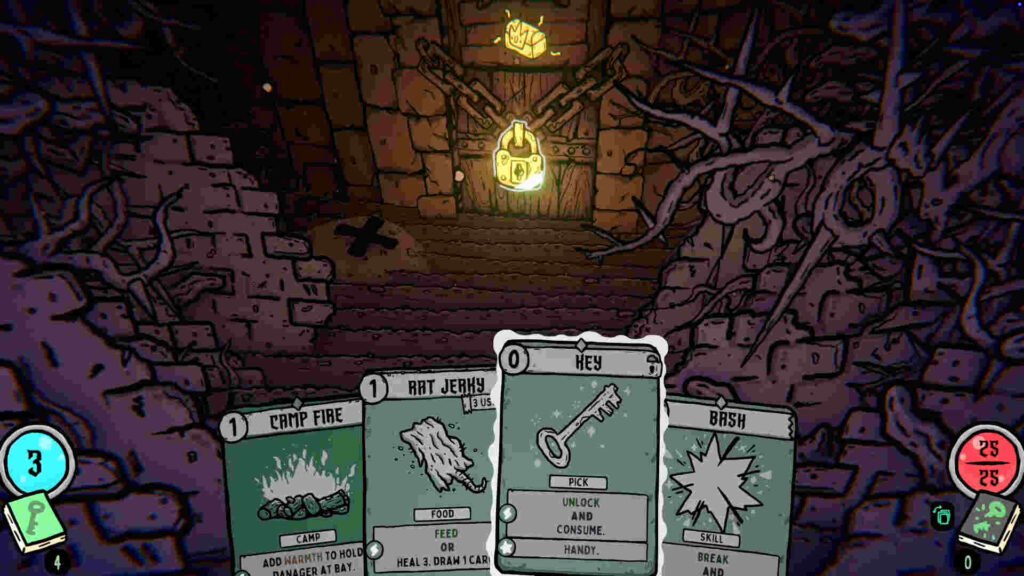
Instead of looking at a traditional map from above, you physically move through the dungeon environment and interact with different points of interest.
Your exploration deck can help you navigate these areas and discover things that would otherwise remain inaccessible.
The tunnels contain rewards, secrets, encounters, and other opportunities that can influence the direction of your run.
This makes exploration feel like an actual part of the game rather than a simple transition between battles.
Roguelike Progression
A run can end when you fail, but the experience is not necessarily wasted. You learn which cards work together, which enemies are dangerous, and which strategies are worth developing.
The game’s progression systems and unlocks provide additional reasons to continue playing.
The developers describe the current Early Access version as containing multiple quests, synergies, and unlocks intended to create a highly replayable experience.
This structure is particularly appealing to players who enjoy improving through experimentation. Instead of simply memorizing one perfect route, you can continue trying new combinations and discovering different ways to approach the same type of challenge.
Visual Style
The game combines hand-drawn art and animation with 3D environments, creating an unusual mixture of two-dimensional illustrations and first-person spaces.
The result is a world that looks almost like a living sketchbook placed inside a 3D dungeon.
The mushroom creatures are especially distinctive. Their exaggerated designs make them memorable while also fitting the game’s surreal atmosphere.
The visual style is colorful without losing the darker feeling of the underground world, creating a balance between fantasy, comedy, and strange horror.
Sound and Atmosphere
The underground setting, unusual creatures, and strange artwork create a feeling that is both mysterious and playful.
Rather than trying to make the world purely frightening, Shroom and Gloom uses weirdness to keep players curious about what they will encounter next.
The combination of first-person movement and hand-drawn environments also makes the game feel more immersive than a conventional card game.
You are not simply watching cards appear on a screen. You are exploring a strange place where those cards become tools for surviving and understanding the environment.
My Personal Experience
What I find most interesting about Shroom and Gloom is how many unusual ideas it puts together.
A first-person deckbuilder is already an uncommon combination, but the developers go further by giving the game two separate decks and adding mechanics where you can roast and eat your enemies.
The card-growth system is another feature that makes the game interesting. Instead of treating cards as disposable tools, you can invest in them and see how they develop during a run.
I also like the visual direction. The hand-drawn artwork gives the game a personality that would be difficult to achieve with a more conventional fantasy style.
For players who enjoy discovering strange mechanics and trying unusual strategies, Shroom and Gloom has a lot of potential.
Is Shroom and Gloom Multiplayer?
No. Shroom and Gloom is a single-player game. The official Steam listing currently identifies single-player as its supported game mode.
There is no online PvP or cooperative multiplayer mode listed. The game is instead designed around individual runs, deckbuilding decisions, exploration, and experimentation.
This makes sense for the genre because the experience depends heavily on the player’s ability to think through card combinations and plan their own strategy.
Platform Availability
Shroom and Gloom is available for Windows PC and macOS.
The Steam version supports Steam Cloud, achievements, and Family Sharing. The game currently supports English and Simplified Chinese interface text according to its Steam listing.
A free demo was also released before the Early Access launch. The demo originally offered 26 handcrafted tunnels, biome bosses, and several different playstyles, giving players an opportunity to understand the basic concept before the full Early Access version.
Pros and Cons
Pros
Shroom and Gloom has a very original concept that combines deckbuilding, first-person exploration, and roguelike progression.
The two-deck system gives the gameplay more depth because exploration and combat require different types of decisions.
The card-growth mechanics can produce satisfying combinations, while the ability to roast and eat enemies gives the game a memorable identity.
The hand-drawn art style is another major advantage because it makes the world immediately recognizable.
Cons
The game is currently in Early Access, so its content and systems may change considerably during development.
Players who are not interested in deckbuilding or turn-based combat may find the gameplay difficult to appreciate.
The first-person perspective may also take some adjustment for players who normally prefer traditional card-game interfaces.
Latest Update and Current Status
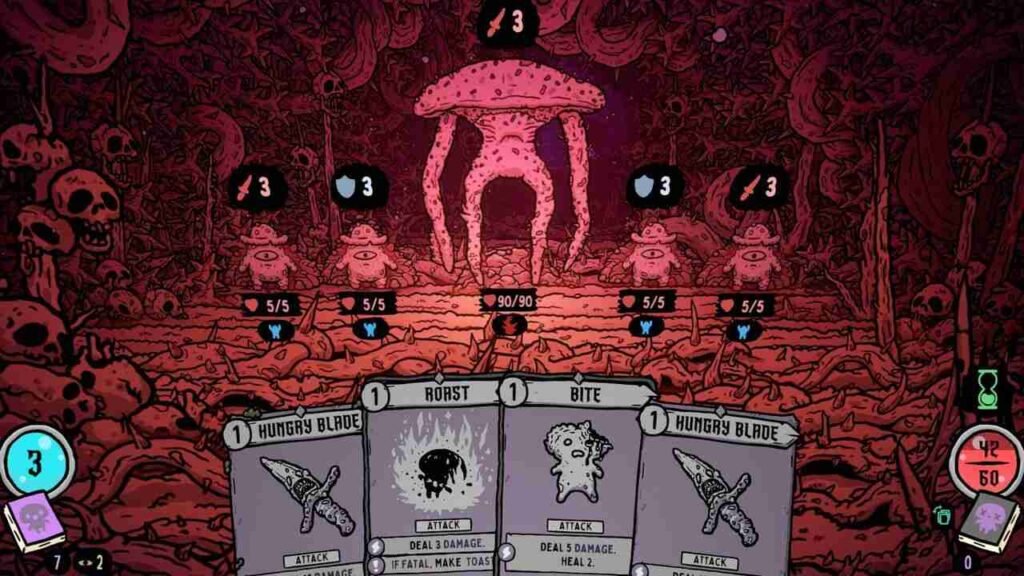
The current version already includes two distinct pathways with unique characters and approximately 300 exploration and combat cards per pathway.
Future Early Access plans include a new pathway, additional character classes, unique cards, quests, and challenges. The developers have also emphasized that player feedback will play an important role in shaping the game’s development toward version 1.0.
The game also arrived after a successful demo period. The Steam demo received overwhelmingly positive user feedback, showing strong interest in the unusual deckbuilding concept before the Early Access launch.
Final Verdict
Shroom and Gloom is one of those indie games that immediately stands out because it is not trying to copy a single established formula.
It combines first-person exploration, roguelike progression, turn-based card combat, double-deckbuilding, card growth, and bizarre mushroom creatures into one unusual package.