
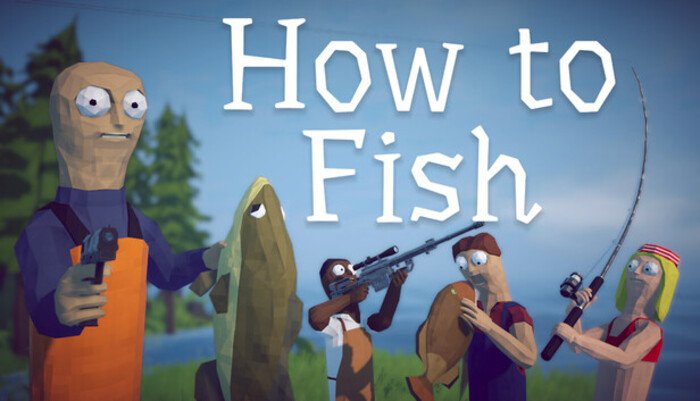
How to Fish is not the kind of fishing game where you simply sit beside a quiet lake and wait for something to bite. Developed by Dazed Games, this unusual PC title mixes fishing with physics-based action, exploration, progression, and a good amount of chaotic humor. The basic idea sounds simple: after a boating accident leaves you stranded on a small island, you need to learn how to fish, earn money, improve your equipment, and eventually find your way back home.
What makes the game interesting is how quickly the peaceful fishing concept turns into something much more unpredictable. Fish are not only catches that you place in a collection. They become part of the game’s progression system, economy, combat, and exploration. You can sell your catches, purchase better equipment, complete quests, discover new islands, and take on dangerous creatures and bosses.
Game Overview
How to Fish is an action, casual, indie, and simulation game built around a first-person fishing experience. The developer has designed it for both solo players and groups, with online co-op allowing players to share the adventure. The Steam listing describes the game as supporting one to four players, while a post-launch update added support for larger eight-player lobbies.
The story begins with a boating trip that goes badly. After crashing into a small island, the player is left with very little equipment and has to figure out how to survive and eventually continue the journey home. Fishing becomes the main way to earn money, but the adventure gradually introduces new equipment, quests, islands, enemies, and bosses.
This combination gives the game a strange identity. It looks like a simple fishing simulator at first, but there is much more happening underneath. The game uses physics and action mechanics to keep the experience unpredictable instead of turning every fishing session into the same repetitive activity.
Fishing and Progression
Progression is one of the strongest reasons to continue playing How to Fish. You begin with almost nothing, which makes the first few catches feel important. Money earned through fishing can be put toward better gear, weapons, and other useful equipment.
This gives the game a simple but effective progression cycle. Catch fish, earn money, improve your equipment, take on harder challenges, and use the rewards from those challenges to continue moving forward. New islands provide another layer to this system because they are not simply larger versions of the starting area. They introduce stronger creatures and better opportunities.
The rare fish system adds another reason to explore. Instead of treating every fish as something that should immediately be sold, players can become interested in discovering unusual variants and completing their collection.
Multiplayer Experience

One of the most enjoyable parts of How to Fish is its cooperative design. The game can be played alone, but the physics-based mechanics make it particularly suitable for groups. Players can work together while exploring islands, catching fish, dealing with creatures, and progressing through the adventure. Steam lists both single-player and online co-op features.
Playing with friends also changes the atmosphere considerably. A straightforward task can become much funnier when several people are trying to coordinate their actions. Since the game does not take its fishing concept completely seriously, mistakes and unexpected physics can become part of the entertainment rather than simply feeling like failures. Mortal Shell II
The original store description lists one to four players, while a later patch introduced support for up to eight players in lobbies. This makes the multiplayer side more flexible than it was at launch.
What Makes the Game Different?
The biggest difference is that How to Fish does not attempt to be a traditional realistic fishing simulator. Instead, it takes fishing as a starting point and builds a much stranger adventure around it.
There are fish to catch and sell, but there are also weapons, quests, bosses, new islands, trick shots, rare variants, and gambling mechanics involving fish. The developers describe the gambling as using fish rather than real money.
The result feels closer to a physics-based adventure with fishing at its center than a conventional simulation game. That distinction is important because players looking for realistic rod-and-reel simulation may find the experience very different from what they expected.
Game Analysis
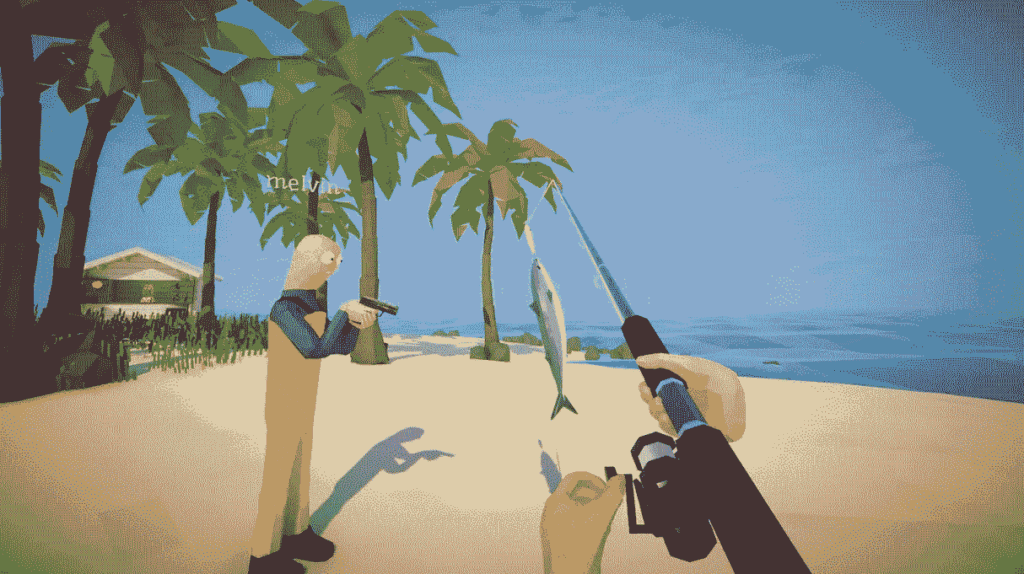
How to Fish works best when approached as a comedy-focused physics adventure rather than a serious fishing simulator. Its simple progression structure is easy to understand, but the combination of fishing, weapons, creatures, bosses, and physics gives the game more variety than its name suggests.
The economy is also straightforward enough that players can understand what they should be doing without spending hours studying complicated systems. Catching fish provides money, money improves equipment, and better equipment helps with the challenges ahead.
The game is particularly interesting for players who enjoy unpredictable co-op experiences. The mechanics are designed in a way that leaves room for accidental failures, funny moments, and improvised solutions. That can give each session a slightly different personality.
However, the unusual design will not appeal to everyone. Someone searching for a calm, realistic fishing simulation may find the combat and cartoon violence surprising. The game also contains gambling involving fish, although it does not involve real money.
My Personal Experience
What stands out to me about How to Fish is how quickly the game moves away from the normal expectations of a fishing simulator. The first impression is that you are going to spend most of your time catching fish, but after getting into the progression system, it becomes clear that fishing is only one part of the larger adventure.
I also like the fact that the game gives you a reason to improve your equipment instead of simply catching fish for the sake of it. When you earn enough money to purchase something better, there is a noticeable sense of progress because the new equipment can help you deal with tougher areas and creatures.
The multiplayer design is probably where the game can become the most entertaining. When physics, fishing, exploration, and combat are mixed together, things do not always go according to plan. For players who enjoy laughing at unexpected situations with friends, that unpredictability can be a major part of the experience.
At the same time, I would not describe it as a relaxing fishing simulator. It has too much action and chaos for that. I would recommend thinking of it as a goofy co-op adventure that happens to revolve around fishing.
Pros and Cons
Pros
- Unusual combination of fishing and action
- Physics-based gameplay creates unpredictable moments
- Online cooperative multiplayer
- Equipment and weapon progression
- Multiple islands to explore
- Boss encounters add variety
- Rare fish provide a collection goal
- Trick shots give the fishing mechanics extra depth
- Simple progression is easy to understand
Cons
- Not designed as a realistic fishing simulator
- Some players may find the physics unpredictable
- Combat may not appeal to players expecting peaceful fishing
- Gambling mechanics may not suit everyone
- The experience is more enjoyable with friends for players who prefer co-op games
Is How to Fish Multiplayer?
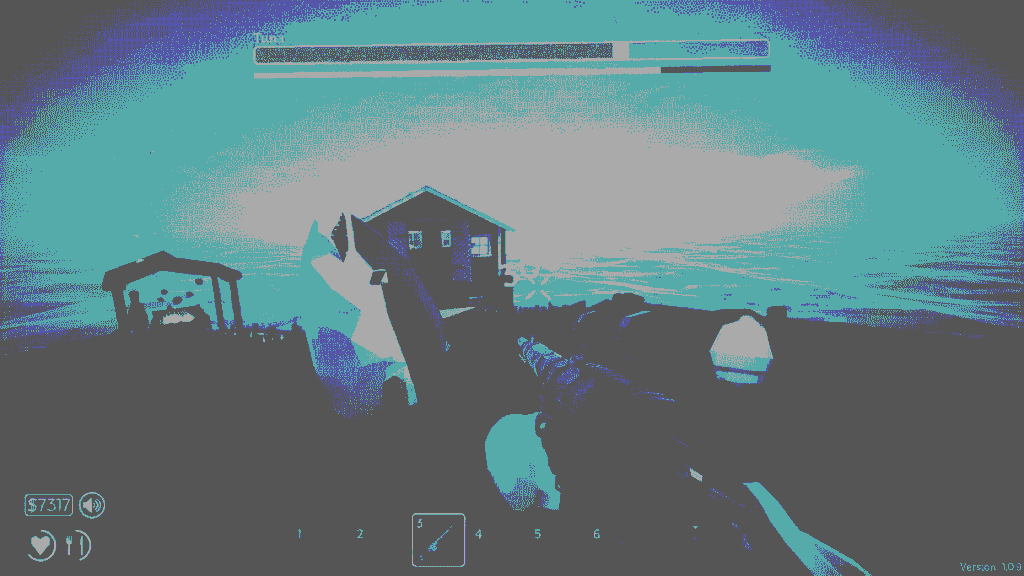
Yes. How to Fish supports online cooperative multiplayer. The original Steam listing describes the game as a one-to-four-player experience, while an official post-launch patch added support for up to eight players in lobbies.
This multiplayer support is important because the physics-driven design naturally creates situations where cooperation and improvisation become part of the fun.
Is How to Fish Worth Playing?
If you want a traditional fishing simulator with realistic equipment, calm environments, and a serious approach to angling, this may not be the right choice.
If you enjoy unusual indie games, physics-based gameplay, exploration, progression, and cooperative chaos, however, How to Fish is much easier to recommend. The game takes a familiar idea and adds enough strange mechanics around it to create something that feels different from a standard fishing title.
The low system requirements are another advantage for PC players with modest hardware. You also do not need to understand a complicated RPG system before starting. The basic idea is easy: catch fish, make money, improve your equipment, explore further, and deal with increasingly dangerous challenges.
How to Download How to Fish on PC

The safest way to get the PC version is through the game’s official store release. Search for How to Fish by Dazed Games, check that you are viewing the correct game, purchase it through the official platform, and install it through your game library.
Avoid unofficial copies or modified installers. Apart from the security risks, unofficial versions may be outdated and can cause problems with multiplayer features or saved progress.
Final Thoughts
How to Fish is an example of how a simple concept can become much more interesting when developers are willing to experiment. It starts with the familiar idea of catching fish, but quickly adds exploration, equipment upgrades, combat, bosses, rare catches, physics-based mechanics, and cooperative multiplayer.
Its biggest strength is probably its personality. The game does not try to turn fishing into a serious simulation. Instead, it uses fishing as the foundation for an unpredictable adventure where things can become ridiculous very quickly.