
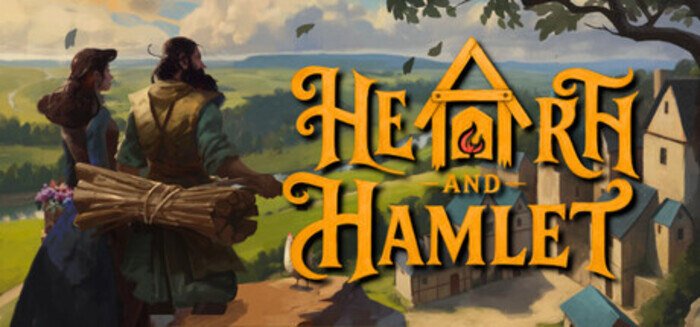
Hearth and Hamlet is a cozy medieval city-building game that starts with almost nothing more than a campfire and slowly turns that tiny settlement into a growing kingdom. Instead of throwing the player into a complicated empire from the beginning, the game takes a much calmer approach. You gather basic resources, assign workers, construct useful buildings, research new technologies, and gradually create a settlement that feels more developed with every stage of progression.
What makes Hearth and Hamlet different from a traditional city builder is its combination of incremental and idle gameplay. You still make important decisions about resources, workers, buildings, policies, research, trade, magic, and defense, but the game is designed to let your settlement continue progressing at a comfortable pace. Its pixel-art presentation and relaxed atmosphere make it suitable for players who enjoy watching a small community slowly develop into something much larger.
Starting With a Campfire
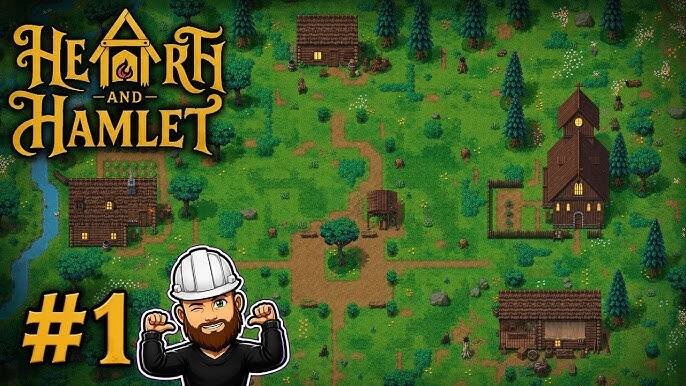
The beginning of the game is intentionally simple. Your kingdom does not start with impressive walls, a castle, or a large population. You begin with a small frontier camp and have to figure out how to turn limited resources into a functioning settlement.
Food, wood, stone, and gold become important parts of the early economy. Instead of immediately worrying about a huge number of systems, you can concentrate on establishing a stable foundation. Once your workers begin handling regular resource gathering, your attention can shift toward construction, research, policies, and expansion.
That gradual progression is one of the game’s strongest ideas because the settlement feels like it is actually developing rather than simply unlocking everything through a traditional level system.
Building Your Settlement
Construction is at the heart of Hearth and Hamlet, but building is only one part of managing the kingdom. Early structures provide the foundation for your economy, while later buildings introduce more advanced systems and opportunities.
The available structures can develop from simple tents and practical buildings into larger locations such as taverns, castles, magical academies, and defensive fortifications. This gives the settlement a clear sense of progression because the visual and functional difference between the early camp and the later kingdom becomes increasingly noticeable.
You also need to think about where your resources are going. Building everything immediately is not always the smartest choice. A useful structure at the right time can solve a production problem, while spending resources too quickly can leave another part of your settlement struggling.
Managing Workers
Your population is an important part of the economy.
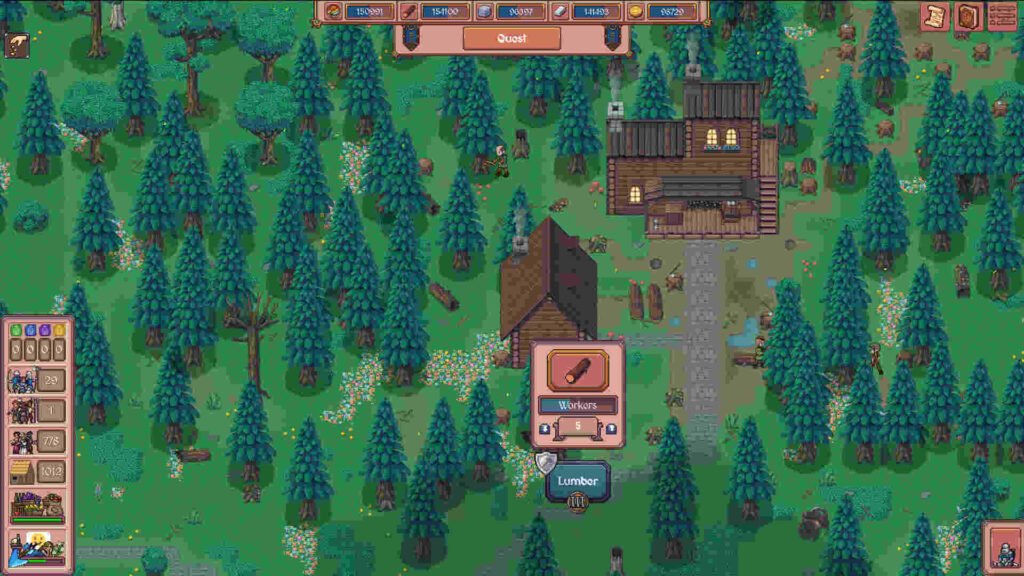
Workers can be assigned to gather and produce resources, allowing your settlement to continue generating supplies while you concentrate on other decisions. This is where the incremental side of the game becomes more noticeable because routine production gradually becomes less dependent on direct clicking.
Good worker management can make a major difference. If your settlement needs more food, you may need to move workers toward food production. If construction is slowing down because you lack wood or stone, changing assignments can help solve the problem.
This creates a simple but satisfying management loop: identify what is holding the kingdom back, adjust your workforce, and then use the additional resources to unlock the next stage of development. Hell Let Loose: Vietnam
Research and Technology
Research gives the game a longer-term progression system.
As your settlement becomes more advanced, you can unlock technologies that permanently expand what your kingdom can do. Research can provide access to new buildings, policies, magical systems, and other upgrades.
This means that every stage of development can open another goal to work toward. You are not simply collecting resources for the sake of collecting them. Resources help you unlock systems that make the kingdom more capable.
The research tree also gives players a reason to plan ahead. You may see an upgrade that looks useful but requires several earlier developments, encouraging you to think about which path you want to follow first.
Laws and Policies
One of the more interesting parts of Hearth and Hamlet is the ability to influence how your kingdom operates through laws and policies.
As the settlement grows, you can make decisions involving taxation, workers, morale, city guards, and other civic matters. These choices are not just cosmetic. They can influence the way your economy and population function.
This makes the game feel more like managing a small kingdom rather than simply placing buildings. You are deciding not only what to construct but also what kind of society you want to create.
A policy that increases income might be useful when you need more money, while another decision could help maintain worker morale or improve the defensive side of the settlement.
Growing the Economy
A growing kingdom needs a stable economy.
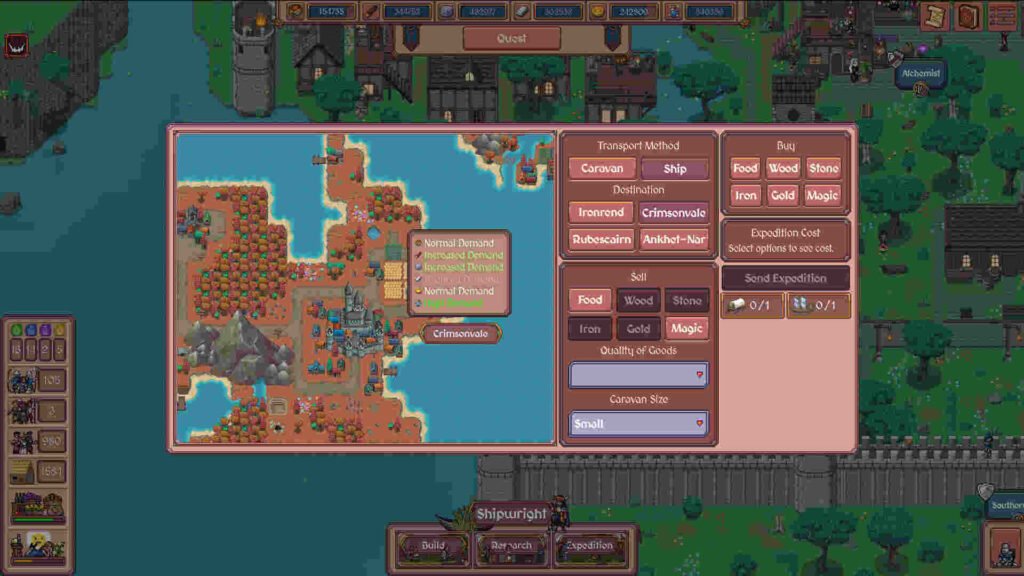
At first, your settlement depends heavily on the resources available around it. As you progress, however, the economy can become more complicated. Gold becomes increasingly useful, while trade allows your kingdom to obtain resources and opportunities beyond what your immediate surroundings provide.
The trade system is particularly useful because it gives the player another option when local production is not enough. Rather than trying to solve every problem by constructing another building, you can look outward and establish relationships with distant lands.
This adds another layer to the game’s management without turning it into an overly complicated economic simulator.
Trading With Other Lands
Hearth and Hamlet allows your kingdom to establish trade connections with neighboring or distant realms.
Trading expands your economy beyond the resources available around your settlement. It also fits naturally into the game’s progression because a small camp eventually becomes a kingdom with enough influence to interact with the wider world.
This system gives the settlement a sense of scale. At the beginning, your attention is focused on gathering wood and food. Later, you are thinking about how your kingdom interacts with other lands and how trade can support further growth.
Magic and Alchemy
The game does not remain purely historical.
As your kingdom advances, magic becomes part of the progression. You can eventually unlock structures such as alchemical laboratories and magical academies, opening a completely different side of the game.
This magical layer fits the pixel-art fantasy setting and gives the later stages of the game a different feeling from the humble opening. What starts as a normal medieval settlement can eventually become a kingdom where technology, magic, trade, and politics all work together.
The addition of magic also prevents the progression from becoming predictable. You are not simply upgrading the same buildings forever; new systems gradually change what is possible.
Defending the Kingdom
Expansion also brings responsibility.
As your kingdom becomes larger, you need to think about protecting what you have built. The game includes defensive fortifications and allows you to recruit soldiers as your realm expands.
Defense gives the settlement another management problem. Building a prosperous kingdom is useful, but losing important resources or failing to prepare for threats can interrupt your progress.
The Pixel-Art World
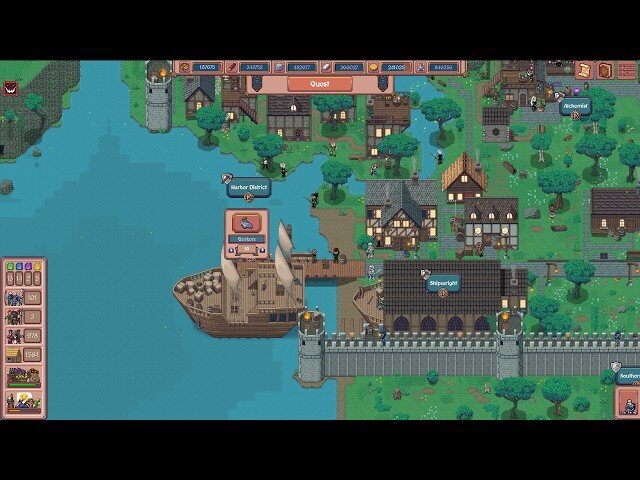
Visually, Hearth and Hamlet uses a charming medieval pixel-art style.
The world includes lakes, rivers, magical swamps, distant lands, and other environments that give the settlement a colorful fantasy setting. The top-down presentation makes it easy to watch your kingdom grow while keeping the overall visual style simple and readable.
The pixel-art approach also matches the relaxed nature of the game. Instead of trying to create a realistic medieval world, Hearth and Hamlet focuses on making its kingdom look inviting and full of small details.
Idle Gameplay
The idle element is an important part of the experience.
You do not have to spend every second manually collecting resources. Once workers are assigned and your settlement has the right systems in place, regular production can continue while you focus on planning your next move.
This makes the game easier to play in short sessions. You can check your kingdom, make a few adjustments, start research or construction, and then return later to continue progressing.
The Pace of Progression
The game is designed around steady growth rather than rushing toward the final stage.
You start with a small camp, improve its economy, unlock buildings, introduce policies, research technologies, discover magic, and eventually build a much more advanced kingdom.
That pacing gives each upgrade more value. When you unlock something new after working toward it for a while, it feels like part of the kingdom’s development rather than another item on a checklist.
My Personal Experience
If I were playing Hearth and Hamlet, I would probably enjoy the early stages the most because there is something satisfying about watching a tiny camp slowly become a real settlement. Starting with a campfire and only a few resources makes every new building feel useful.
I would also spend time balancing workers instead of putting everyone into the same resource. If food was becoming a problem, I would shift the workforce toward food production before continuing construction. Once the economy was stable, I would start looking at research and long-term upgrades.
What Makes Hearth and Hamlet Different?
The biggest difference is how it combines several genres without making any single system overwhelming.
It is a city builder because you construct and expand a settlement. It is an incremental game because your kingdom gradually becomes more productive. It has idle elements because workers can handle repeated resource production. It is also a management game because you need to make decisions about policies, workers, trade, research, and defense.
The fantasy elements then add another layer through magic and alchemy.
Instead of focusing on one complicated system, the game slowly introduces new systems as the kingdom develops.
Who Is This Game For?
Hearth and Hamlet is a good fit for players who enjoy city builders, incremental games, idle games, management simulators, strategy games, and relaxing pixel-art experiences.
It should especially appeal to players who like seeing numbers and production gradually improve without needing to fight through difficult missions every few minutes.
The game can also work for people who normally find traditional city builders too demanding. Its slower pace and incremental structure make it easier to approach without immediately worrying about a huge number of buildings, workers, and resources.
System Requirements
Minimum
The official Steam page currently provides the game’s Windows and SteamOS/Linux system-requirement sections, but the accessible listing does not expose a complete processor, memory, and graphics specification in the available text. Because of that, it is better not to publish invented hardware numbers as official requirements.
For your site, I would recommend checking the current Steam requirements before publishing this section so that the specifications remain accurate.
Recommended
The same applies to the recommended configuration. Hearth and Hamlet uses a pixel-art presentation and is not positioned as a graphically demanding AAA title, but exact hardware requirements should still come from the current official store listing rather than guesses.
Is Hearth and Hamlet Multiplayer?
No. Hearth and Hamlet is designed as a single-player experience. The Steam listing identifies single-player as one of its features.
The game is therefore focused entirely on developing your own settlement rather than competing against other players.
Is Hearth and Hamlet a City Builder?
Yes, but it is not a traditional city builder.
It combines city-building with incremental and idle mechanics. You construct buildings, manage workers, gather resources, research technology, establish trade, develop magic, and make kingdom policies while the settlement gradually becomes more productive.
This combination is what gives the game its relaxed identity.
Is There Combat?
There is a defensive side to the game, including soldiers and defensive fortifications. The Steam community also notes that combat was part of the game’s progression during development, with later updates balancing the system.
However, combat is not the main focus. The heart of the experience remains building and managing the kingdom.
Is Hearth and Hamlet Worth Playing?
Hearth and Hamlet is worth considering if you want a city builder that does not constantly demand your attention.
Its strongest idea is the progression from a tiny camp to a full kingdom. Every major system contributes to that journey. Resources help construct buildings, buildings create new opportunities, research unlocks technology, policies change the way the kingdom operates, trade expands the economy, and magic introduces fantasy systems later in the game.
The combination works particularly well for players who enjoy watching gradual progress. Instead of needing to complete a large objective every time you sit down, you can make a few decisions and then watch your settlement continue developing.
How to Download This Game
Hearth and Hamlet was released for PC on August 19, 2026. The official Steam listing identifies Phorust Studios as the developer and Runic Forge and Gamersky Games as publishers.
For PC players, the safest way to install the game is through its official Steam release. Using the official version also means receiving updates and fixes as the developers continue improving the game.
Conclusion
Hearth and Hamlet turns the simple idea of building a medieval settlement into a relaxing incremental experience. Starting from a single campfire, you gather resources, assign workers, construct buildings, research new technologies, establish policies, trade with other lands, develop magic, and eventually transform the small frontier camp into a thriving kingdom.
Its pixel-art style gives the game a charming identity, while the combination of city building and idle progression makes it easy to play without constantly demanding attention. The addition of laws, trade, defense, magic, and research also gives the later stages more depth than the simple opening might suggest.