

Dungeon Settlers is a dark fantasy strategy game that combines colony management, settlement building, dungeon crawling, survival, and tactical combat into one connected experience. Instead of simply sending a group of heroes into a dungeon, the game asks players to establish an entire settlement in a barren and dangerous land before preparing an expedition to explore the dungeon responsible for the world’s calamities.
The game was developed by CanOpener and published by CanOpener and WhisperGames. It entered Steam Early Access on September 4, 2026, and is designed as a single-player strategy experience. The developers describe it as a hardcore strategy game where players must carefully manage their settlement, prepare their expedition members, study enemy behavior, and make tactical decisions during real-time combat with pause.
Game Information
- Title: Dungeon Settlers
- Developer: CanOpener
- Publisher: CanOpener, WhisperGames
- Release Date: September 4, 2026
- Genre: Strategy, Simulation, Colony Sim, Dungeon Crawler
- Game Mode: Single-player
- Perspective: 2D
- Combat: Real-time with Pause Tactical Combat
- Platform: PC
- Release Status: Early Access
- Theme: Dark Fantasy, Medieval
- Gameplay: Settlement Building, Resource Management, Dungeon Exploration, Tactical RPG
What Is Dungeon Settlers?
Dungeon Settlers is essentially a combination of a colony simulator and a dungeon-crawling RPG. You take the role of the leader of an expedition sent by the Guild to investigate and ultimately destroy a dungeon that is responsible for a series of calamities.
The problem is that the dungeon cannot simply be attacked immediately. Your expedition needs food, shelter, equipment, facilities, and properly trained members. This means you first have to build a functioning settlement in a barren area affected by magical erosion. Your settlement becomes the foundation that supports every future expedition.
The game therefore constantly asks you to think about preparation. Sending an unprepared group into dangerous territory can have serious consequences, especially because the game includes permanent death. If a character dies, they do not simply return to the settlement after the battle, which makes equipment, traits, skills, and tactical decisions much more important.
Building Your Settlement
Settlement construction is one of the most important parts of Dungeon Settlers. Your starting area is a desolate piece of land, and you need to gradually turn it into a functioning home for your people.
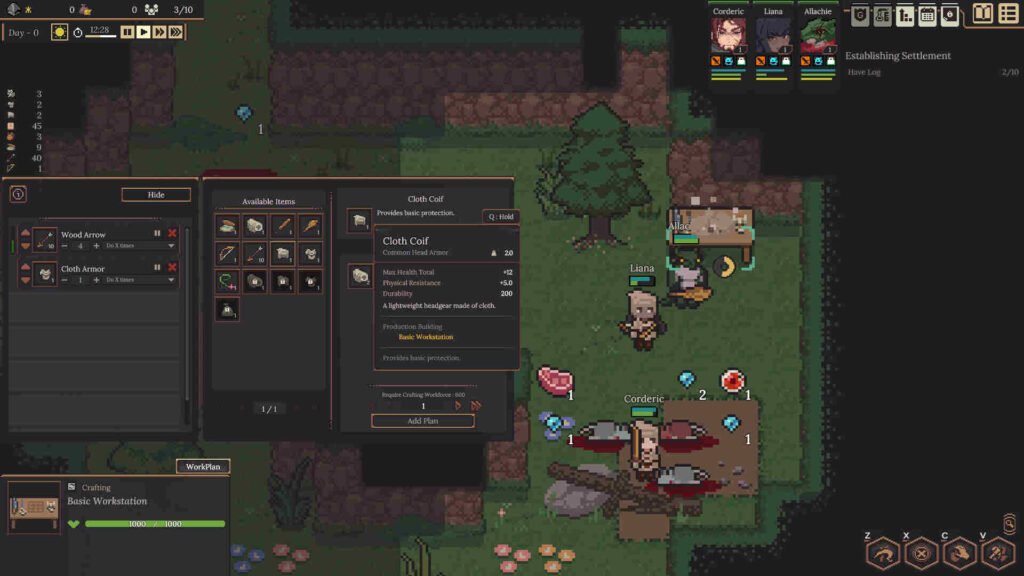
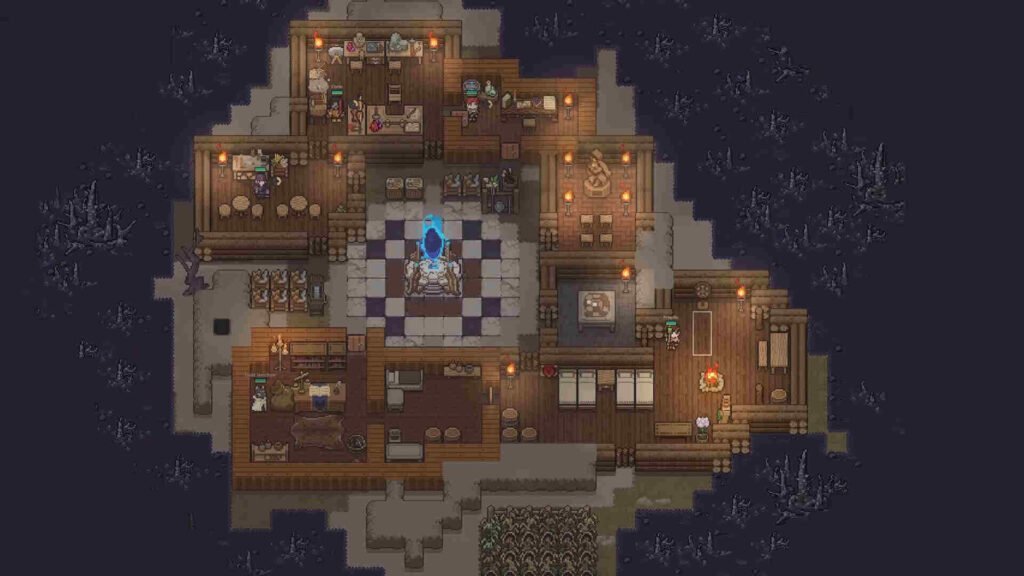
Rather than simply placing buildings wherever you want, the game encourages players to think about how the settlement is organized. You can construct rooms by placing walls and doors, creating areas such as bedrooms and dining spaces. Production facilities such as forges, anvils, and smelters can also be established to support your expedition.
This makes base building more meaningful than simply decorating a town. The settlement is essentially your preparation center. Its buildings and production systems determine what resources you can create, what equipment you can provide, and how effectively your expedition can operate.
Resource Management
Resources are an essential part of the game’s strategy. Your settlers need food and shelter, while expedition members require supplies before entering the dungeon.
Managing these resources creates a constant balance between immediate survival and long-term progression. Spending everything on settlement improvements might leave you short of expedition supplies, while focusing exclusively on dungeon preparation could prevent the settlement from developing properly. Worming from Home
The game therefore rewards players who plan ahead. Before beginning an expedition, you need to consider what your party will require and whether your settlement can produce enough supplies to support the journey.
Recruiting Expedition Members
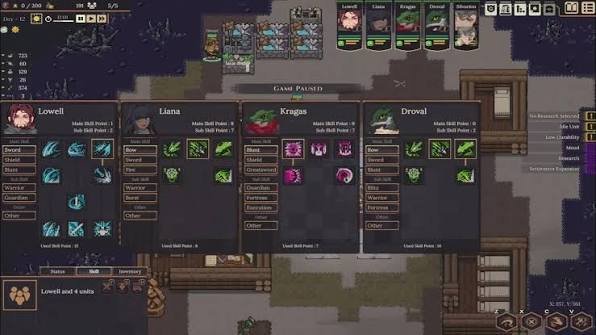
Dungeon Settlers allows players to build a party of up to four members. Each recruit comes with their own characteristics, including equipment, skills, traits, and background.
Choosing the right members is important because the party has to deal with different enemies and situations inside the dungeon. A group with strong offensive abilities might defeat enemies quickly but struggle when sustained damage becomes a problem. A more balanced group may be slower but better prepared for unpredictable encounters.
Recruitment therefore becomes another strategic decision. You are not simply choosing the strongest-looking character. You need to consider how their abilities fit together and whether they complement the rest of your party.
Character Skills, Traits and Equipment
Character development goes beyond simply increasing a level. Skills, traits, equipment, and backgrounds all contribute to how an expedition member performs.
Equipment can affect a character’s effectiveness during combat, while skills provide specific tactical options. Traits can further influence the strengths and weaknesses of individual members, making each recruit potentially useful in a different way.
This creates opportunities for specialized party compositions. One character might be better suited for absorbing damage, another may provide strong offensive abilities, while another can contribute through support or status effects.
Dungeon Exploration
Once the settlement and expedition are prepared, players can descend into the dungeon. This is where the game’s second major gameplay system takes over.
The dungeon is presented as a dangerous environment filled with enemies, combat encounters, and challenges. The goal is not simply to rush as deeply as possible. Players need to consider the condition of their party, available resources, and the risks associated with continuing.
The current Early Access version includes the first two dungeon regions, both of which can be played through from beginning to end. The developers intend to add additional regions and content during the Early Access period.
Real-Time Tactical Combat
Combat in Dungeon Settlers uses a real-time system with pause, rather than traditional turn-based battles. This means enemies and party members act continuously, but players can pause the action to analyze the situation and issue commands.
This approach creates an interesting balance between speed and careful planning. During an easy encounter, you may allow the battle to continue naturally, but when several enemies begin attacking at once, pausing gives you an opportunity to reassess your strategy.
The game does not impose traditional turn or round limits. Instead, victory depends on understanding enemy behavior and using your party’s skills and equipment effectively.
Status Effects and Enemy Patterns
Status effects add another layer to combat. The Early Access information highlights effects such as stun, bleed, burn, and vulnerability. These effects can influence how players approach different enemies and encounters.
Understanding enemy behavior is equally important. If an opponent has a dangerous attack pattern, rushing forward may result in unnecessary casualties. A more careful player can observe what the enemy does, identify an opening, and then coordinate the party’s abilities around that weakness.
This is particularly important because the game’s permanent-death system makes reckless experimentation expensive. Players are encouraged to learn from encounters rather than repeatedly sacrificing characters without a plan.
Permanent Death
One of Dungeon Settlers’ most important features is permadeath. When an expedition member dies, they do not simply return after the battle. The developers specifically emphasize that once a character dies, there is no coming back.
This changes the way players approach the entire game. A character is not just another disposable combat unit. Their equipment, skills, traits, and development represent an investment from the settlement.
Permadeath also makes preparation more meaningful. Food, equipment, party composition, and tactical positioning all become part of a larger risk-management system.
Research and Production
Research connects settlement development with expedition preparation. By researching new technologies and production options, players can unlock useful buildings and equipment that make future expeditions more effective.
This means research choices should be made with a long-term plan. Instead of unlocking something simply because it is available, players need to think about what their expedition currently needs and what future problems they are likely to encounter.
Production then turns those discoveries into practical benefits. The settlement becomes a place where resources can be processed and equipment prepared before the next dungeon journey.
The combination of research, production, and exploration gives the game a continuous progression loop. You improve the settlement, prepare the party, explore the dungeon, learn from the experience, and then use what you gained to improve the next expedition.
My Personal Experience
What stands out most about Dungeon Settlers is that it does not treat settlement building and dungeon exploration as two unrelated game modes. Everything feels connected to the same expedition-focused goal.
Building a bedroom or production facility might sound like a basic colony-sim activity, but its importance becomes clearer when you realize that these systems support the people who will eventually enter the dungeon.
The same is true for character development. Choosing equipment or skills is not just about making a number bigger. You are preparing an individual who could potentially be lost forever if the expedition goes badly.
Graphics and Visual Style
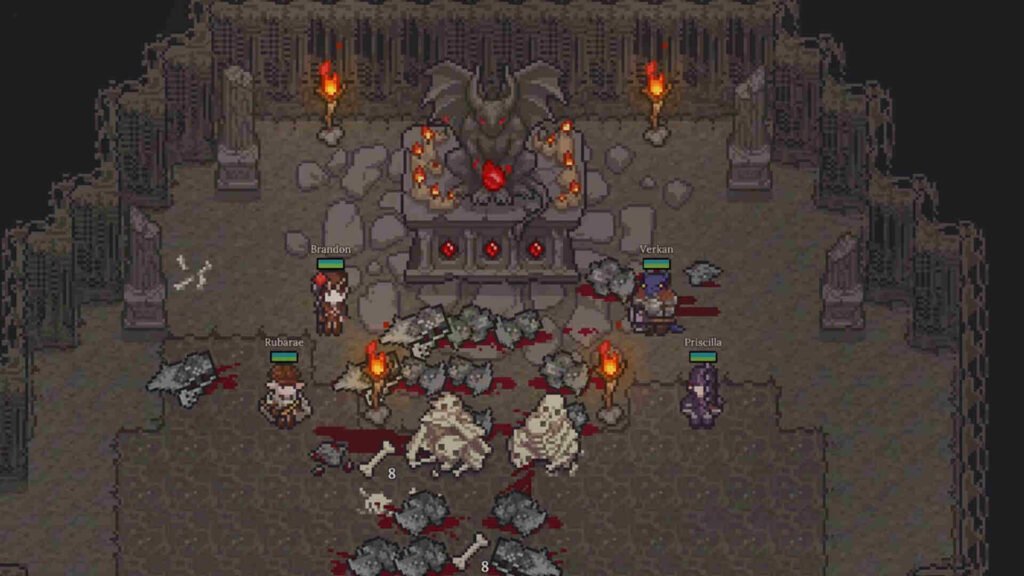
Dungeon Settlers uses a 2D pixel-art visual style that fits its dark fantasy setting. The presentation emphasizes characters, environments, buildings, and dungeon encounters without relying on highly demanding graphical effects.
The settlement and dungeon environments have distinct purposes. The settlement represents preparation, production, and safety, while the dungeon represents uncertainty, combat, and danger.
The pixel-art presentation also works well with the game’s strategy focus because important characters and environmental elements remain easy to recognize. Instead of overwhelming the screen with visual effects, the game focuses on readable gameplay and tactical decision-making.
Is Dungeon Settlers Multiplayer?
No. Dungeon Settlers is a single-player game. The official Steam listing includes Single-player as one of its supported features, along with Steam Cloud and Family Sharing.
The game is designed around managing your own settlement, recruiting and developing your expedition members, and making tactical decisions during dungeon exploration. There is currently no cooperative multiplayer campaign listed as part of the game.
Platform Availability
The developers have also made it clear that the Early Access version is a work in progress. They expect to continue adding regions, monsters, weapons, skills, races, events, balance improvements, optimization, localization, and other features as development continues. Modding support and Steam Workshop integration are also planned.
Early Access and Future Content
Dungeon Settlers is still in Early Access, which is important when evaluating the current game. The developers estimate that the Early Access period will last around two years and have stated that they want to use community feedback to improve the game’s interconnected settlement, exploration, and combat systems.
The planned expansion is substantial. The developers intend to add more regions, monsters, weapons, skills, races, events, and other gameplay content while continuing to refine balance, interface design, optimization, localization, and overall polish.
They also plan to introduce modding support, including Steam Workshop integration. This could eventually give the community additional ways to expand and customize the game.
Pros and Cons
Pros
Dungeon Settlers has a very strong central concept because settlement management directly supports dungeon exploration. Instead of feeling like two separate games, the colony and dungeon systems form one continuous gameplay loop.
The tactical combat is another major advantage. Real-time battles with pause allow players to react quickly while still giving them opportunities to stop the action and carefully plan their next move.
Cons
The biggest concern is that Dungeon Settlers is still an Early Access game. Some systems are likely to change, and the amount of available content is smaller than what is planned for the eventual full version.
The permanent-death mechanic may also be difficult for casual players. Losing a character after investing time into their development can be frustrating, especially during an unexpected combat encounter.
Latest Update and Current Status
The game has also attracted a strong early player response. Current Steam data shows a Very Positive rating, although the exact review count and percentage can change as more players submit reviews.
The development team has emphasized that community feedback will play an important role during Early Access. This means the current version should be viewed as the foundation of a larger game rather than the final product.
Should You Play Dungeon Settlers?
Dungeon Settlers is particularly interesting because it makes the relationship between settlement management and dungeon exploration the heart of the experience. Instead of building a colony simply because building is fun, you are building it to support a dangerous expedition.
Every part of the preparation process has a purpose. Your rooms provide a place for people to live, production facilities help create useful resources, research unlocks additional possibilities, and character development prepares your party for increasingly dangerous encounters.
The dungeon then becomes the ultimate test of those decisions. A poorly prepared expedition can fail quickly, while a carefully constructed party with the right equipment and skills has a much better chance of surviving.
Conclusion
Dungeon Settlers offers a compelling combination of colony management, dark fantasy exploration, tactical RPG combat, and dungeon crawling. Developed by CanOpener, the game places players in charge of an expedition that must establish a settlement in barren land before confronting the dungeon responsible for the world’s calamities.
Its biggest strength is the way all of its systems work together. Settlement construction supports resource production, research improves preparation, character development strengthens the expedition, and successful dungeon runs contribute to the continued growth of the settlement.
The real-time-with-pause combat gives battles a strategic character, while enemy traits, attack patterns, skills, equipment, and status effects encourage players to think before acting. Permadeath adds significant tension because mistakes can permanently remove valuable expedition members.