Getting fired is usually a bad thing. In Chop Chop Inc., it becomes the start of a new business.
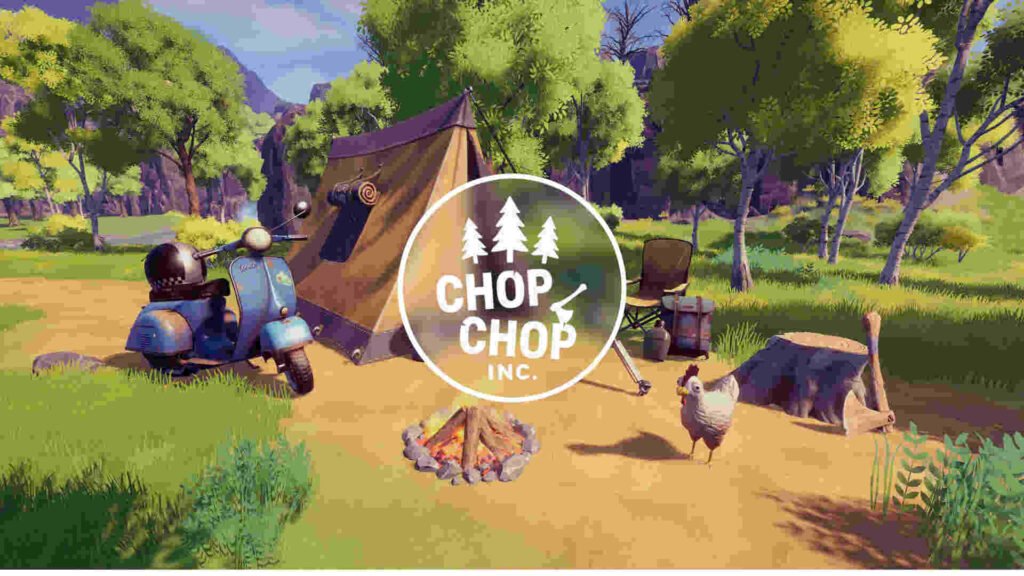
You lose your job at Furnox Corp and are left with an axe, a few trees, and a lot of motivation. Instead of looking for another job, you decide to build your own furniture company from the ground up.
The idea is simple but fun: cut trees, collect wood, turn it into useful materials, make furniture, sell your products, and use the money to improve your business. As the company grows, you can add machines, automate production, explore new areas, and build a much bigger operation.
Game Overview
Chop Chop Inc. is a first-person business and crafting game with a relaxed and funny style.
At the beginning, you don’t have a large factory or expensive equipment. You have to do most of the work yourself.
You take your axe, find trees, cut them down, process the wood, and turn your materials into products.
As you make money, you can buy better equipment and machines. Eventually, your small operation can become a much larger furniture business.
The game mixes several ideas together:
- Woodcutting
- Crafting
- Exploration
- Resource management
- Automation
- Business growth
- Character upgrades
- Building
- Cooking
- Light comedy
Steam also lists the game as single-player, with achievements, Steam Cloud, and Family Sharing support.
Starting From Nothing
The opening idea is probably the easiest part of the game to understand.
You were fired, so you start again.
There is no big company waiting for you. You have to create something yourself.
Your first tools are basic, and your production is mostly manual. You cut trees and process the resources by hand.
This makes early progress feel important because even a small upgrade can save time.
Once you start earning more money, you can slowly move away from manual work and build a better production system.
Cutting Trees
Trees are the foundation of your business.
The game world contains different types of trees, and they are not all completely normal. Some trees can have unusual properties, including stone, metal, and electric trees. GRAIN ROT
The basic process is easy:
Find a tree → chop it down → collect the resources → process them → make something useful.
It sounds simple, but the system becomes more interesting when you start thinking about efficiency.
You don’t just want wood.
You want to turn that wood into something that makes more money.
Turning Wood Into Products
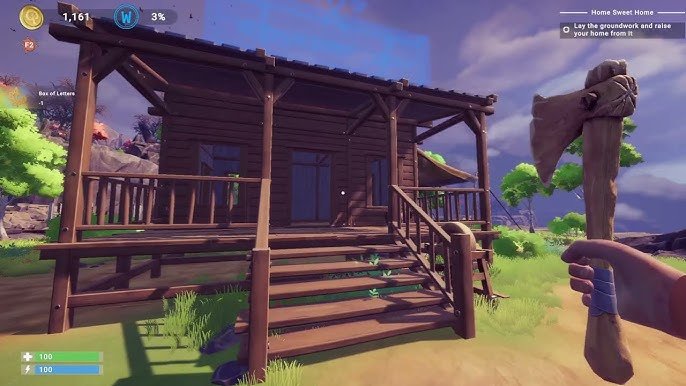
Raw logs are only the beginning.
You can process logs into planks and then use those materials to create furniture and other objects.
This creates a satisfying production chain.
You start with something natural and basic, then slowly transform it into a finished product.
The more you understand the production process, the easier it becomes to decide what resources you need and which products are worth making.
Building Furniture
Furniture crafting is the main business side of the game.
You can create different pieces using blueprints, raw resources, and purchased components.
Some of the designs are intentionally silly.
For example, the game lets you make things such as a wooden PC and a wooden weight bench.
That tells you a lot about the game’s personality.
It isn’t trying to be a serious furniture simulator all the time. It wants you to experiment and have fun with the crafting system.
Selling Your Creations
Making furniture is only useful if you can sell it.
Once you have finished products, you can distribute them to the nearby city and earn money.
That money can then go back into the company.
You might spend it on better tools, machines, upgrades, or other improvements.
This creates the main business loop:
Gather → Process → Craft → Sell → Upgrade → Produce More
As the operation becomes more efficient, you can make more money without doing every task manually.
Automation

Automation becomes increasingly important as the business grows.
At first, you are doing most things yourself.
Later, you can introduce new machines and create better production lines.
This is where the game starts feeling less like simple woodcutting and more like a business simulator.
Instead of asking, “What should I craft next?” you can start thinking about questions such as:
- How can I make production faster?
- Which machines should I buy?
- Which resources should I keep?
- What should I automate?
- How can I make more money from the same amount of material?
That gradual change is one of the more enjoyable parts of the game.
Exploring the World
Chop Chop Inc. isn’t limited to your headquarters.
You can explore a handcrafted world, discover resources, meet unusual characters, and find secrets.
New areas can be unlocked as your business develops. These areas can also bring new customers, missions, and upgrades.
This gives you a reason to leave your production area instead of spending the entire game inside your workshop.
Strange Trees
One of the more unusual features is the variety of trees.
Normal trees are useful enough, but the game also includes strange types such as stone, metal, and electric trees.
Their unusual nature adds some mystery to exploration.
You can investigate where they came from as you progress, or you can simply do what the game expects:
Chop first. Ask questions later.
Meeting the Locals
The world is also populated by unusual characters.
You can meet different personalities, help them, befriend them, and connect them to parts of your growing operation.
This adds some life to the world.
Instead of feeling like an empty map created only for collecting resources, the area has people and characters that become part of your progress.
And yes, the game seems to have a strange relationship with ducks.
The developers clearly want players to wonder what those ducks are planning.
Character Progression
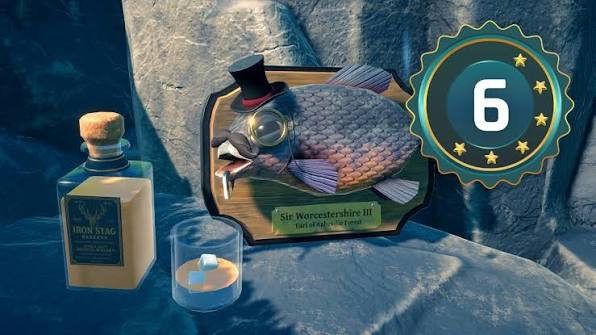
Your company isn’t the only thing that improves.
Your character can also become stronger.
The game includes strength and stamina upgrades, and you can improve these stats by interacting with the world and using exercise equipment.
It is a funny idea, but it also gives progression another layer.
You are not simply upgrading machines.
Your own character becomes more capable as well.
Cooking
Chop Chop Inc. even includes cooking.
Resources can be turned into meals that provide stat boosts.
It is not the first thing you might expect from a furniture business simulator, but it fits the game’s relaxed style.
The more systems you combine, the more ways you have to improve your character and business.
My Personal Experience
What I like about Chop Chop Inc. is how easy it is to understand the basic idea.
You start with almost nothing.
You chop trees, make things, sell them, and use the money to improve your setup.
That kind of progression can be very satisfying because you can clearly see how your small business changes over time.
A serious business simulator probably wouldn’t let you make a wooden PC or worry about mysterious electric trees.
Chop Chop Inc. doesn’t take itself too seriously, and I think that works well with the simple gameplay.
For me, the best part would probably be reaching the point where the production process is mostly automated and watching a small operation turn into a proper furniture business.
A Relaxing Game With a Business Twist
The game can be relaxing because there isn’t a constant need for combat or fast reactions.
Much of the gameplay is about gathering resources, building things, exploring, and improving your operation.
That makes it a good option when you want something different from action-heavy games.
You can spend time chopping trees, work on a new furniture design, upgrade a machine, or simply explore the world.
System Requirements
Minimum
- OS: Windows 10 or Windows 11
- Processor: Core i5-6700 or Ryzen 5 1600
- Memory: 8 GB RAM
- Graphics: GeForce GTX 1070 Ti or Radeon RX 5600 XT
- DirectX: Version 12
- Storage: 5 GB available space
- Additional: SSD required
- Architecture: 64-bit processor and operating system
Recommended
- OS: Windows 10 or Windows 11
- Processor: Core i5-11600K or Ryzen 5 5600X
- Memory: 16 GB RAM
- Graphics: GeForce RTX 3080 Ti or Radeon RX 6800 XT
- DirectX: Version 12
- Storage: 5 GB available space
- Additional: SSD required
- Architecture: 64-bit processor and operating system
Pros & Cons
Pros
- Simple and enjoyable gameplay loop
- Interesting furniture crafting
- Business progression feels rewarding
- Automation adds depth
- Large selection of things to craft
- Funny world and characters
- Exploration gives extra reasons to play
- Character upgrades
- Cooking system
- Strange resource types
- Low storage requirement
Cons
- Single-player only
- The relaxed pace may not suit everyone
- Players looking for combat may find it too peaceful
- Automation can take time to develop
- The visual style may not appeal to players who prefer realism
Who Should Play Chop Chop Inc.?
This game is a good fit if you enjoy:
- Simulation games
- Crafting games
- Business games
- Automation
- Resource management
- Exploration
- Relaxing gameplay
- Funny indie games
- First-person simulation
- Building and progression
If you enjoy watching a small operation slowly become something much bigger, there is a lot here to like.
Is Chop Chop Inc. Worth Playing?
Chop Chop Inc. is worth considering if you want a relaxed simulation game with a funny personality.
Its strongest feature is the progression from manual work to automation.
At first, you’re simply cutting trees.
Later, you’re managing resources, building furniture, improving machines, unlocking new areas, finding better materials, and expanding your business.
That makes the game feel more rewarding than a simple woodcutting simulator.
The humorous characters, strange trees, unusual furniture designs, and cooking system also give it a personality of its own.
How to Download This Game
Chop Chop Inc. is available for Windows PC through Steam, where it was released on August 7, 2026.
For a safe installation, use the official Steam version rather than unknown third-party installers. The official version also provides access to updates, achievements, and Steam Cloud support.
Final Thoughts
Chop Chop Inc. takes a simple idea and slowly turns it into a full business simulation. You begin with an axe and a few trees. From there, you collect resources, process wood, create furniture, sell your products, buy better machines, and build a growing furniture empire.
The funny world makes the experience even more enjoyable. Strange trees, unusual furniture, quirky characters, cooking, and mysterious ducks give the game a personality that separates it from more serious management games.
You start by doing everything yourself. Later, your machines and production lines can handle more of the work while you focus on expansion and new opportunities.