
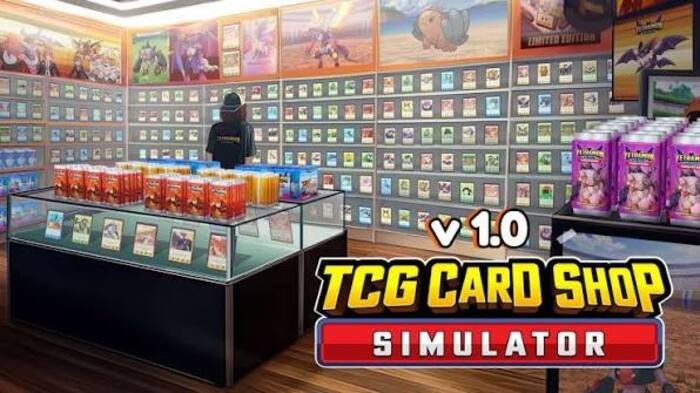
Running a trading card shop sounds simple: stock the shelves, sell packs, and keep customers happy. TCG Card Shop Simulator turns that idea into a first-person business simulation where every decision can affect the shop’s growth. You manage inventory, set prices, arrange the store, and decide whether to sell booster packs or open them in search of rare cards.
Developed and published by OPNeon Games, the game combines shop management with the excitement of collecting cards. Its appeal comes from balancing everyday store tasks with the temptation of opening another pack. As the business grows, new products, furniture, and activities give players more ways to shape their own card shop.
Game Overview
TCG Card Shop Simulator is a single-player simulation and management game. You begin with a small store and gradually turn it into a larger business by selling trading card products and reinvesting the money you earn.
The game is not only about making sales. You also organize shelves, respond to customer demand, keep the shop tidy, and make choices about which products deserve space. Alongside the business side, you can collect cards, search for rare finds, and build a personal collection.
Gameplay Experience
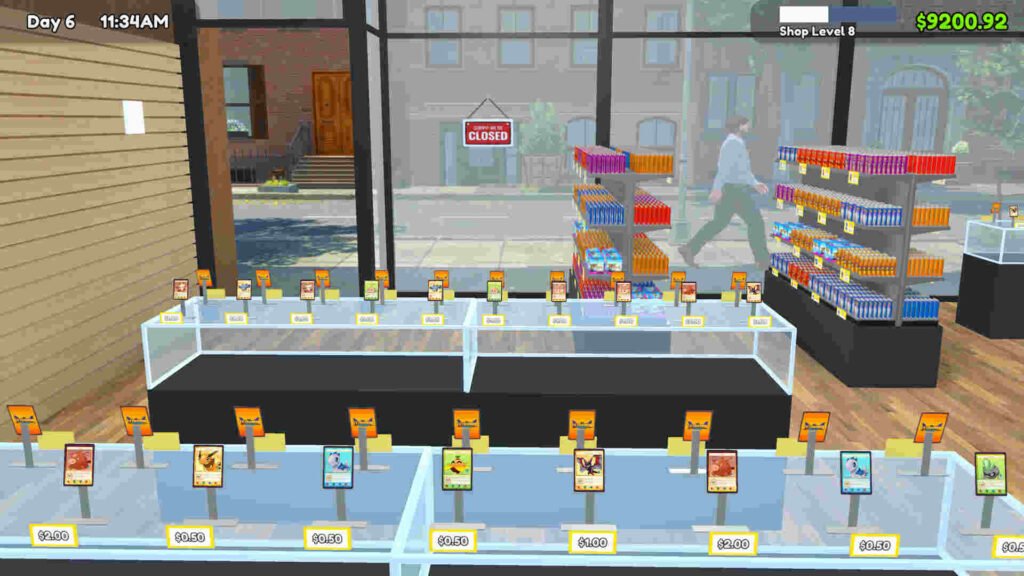
The main gameplay loop revolves around ordering products, placing them in the shop, and selling them to customers. You choose what to stock and set prices, so keeping track of demand and available money matters. Products that sell well can help fund the next expansion, while poor inventory choices may leave cash tied up in items customers are not buying.
You also handle practical shop duties. Shelves need to be organized, the store needs to remain clean, and customers should have room to browse and play. As the business becomes busier, keeping the shop running smoothly becomes part of the challenge.
One of the game’s defining choices is what to do with booster packs. You can sell them for steady income, or open them yourself and hope to find valuable cards. Rare cards can be sold for profit or kept to build your collection, making each pack an opportunity as well as a business decision. Fish Lab
Key Features
Build and Customize Your Store
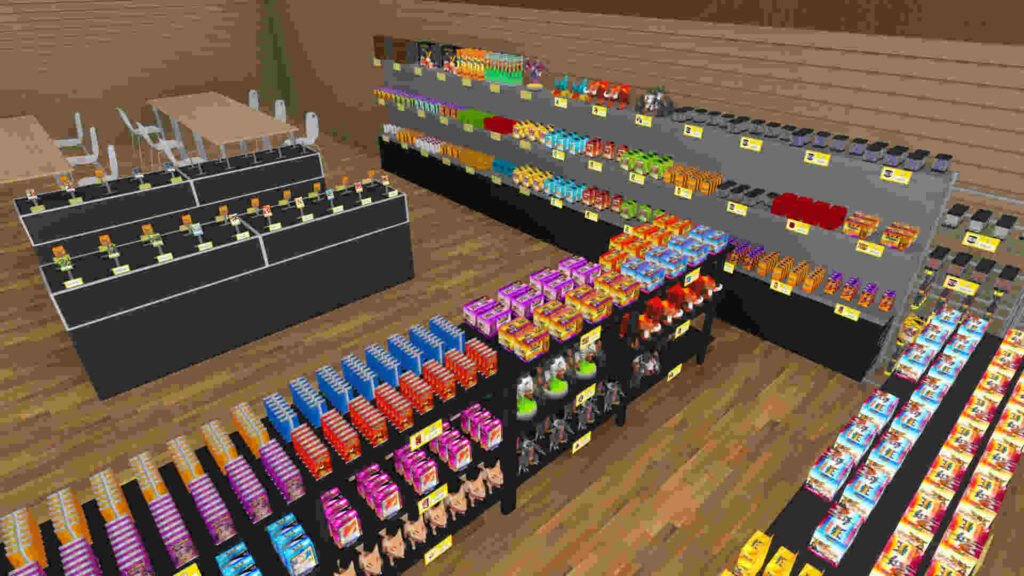
The shop starts small, but you can expand its space and arrange furniture and products to suit your plans. Shelf placement and store organization affect how customers move through the shop, so layout is more than decoration.
Stock Booster Packs and Card Products
You can order different booster packs and other trading card products for your shelves. The goal is to keep a useful selection available while avoiding unnecessary spending.
Open Packs and Collect Cards
Opening booster packs offers a different kind of reward from running the store. You may discover rare cards that can be sold for money or added to your own collection.
Set Prices and Manage Profits
You control the prices of products in your store. Higher prices may increase the money earned per sale, but pricing is part of managing customer demand rather than a guaranteed way to make more profit.
Hire Staff
As the shop grows, hiring workers can help with its workload. Staff improvements and management choices become more relevant as there are more products and customers to handle.
Host Card Game Events
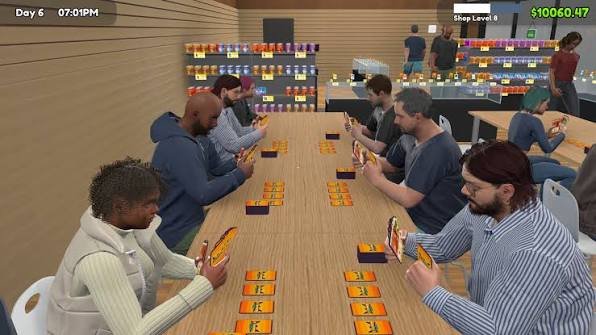
The shop can also serve as a place for customers to play card games. You can organize events and set entry fees, adding another activity beyond selling products.
Play the In-Game Tetramon TCG
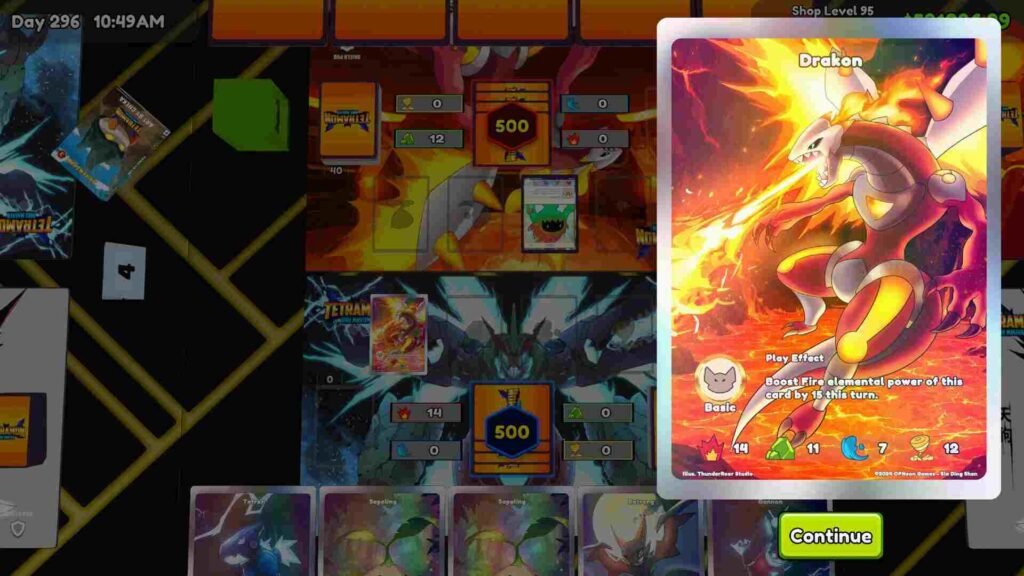
The full release adds a playable card game called Tetramon. You can build a 50-card deck at the workbench and play against a customer who is waiting at a play table.
Progression and Shop Expansion
Progression is based on earning money, unlocking products, and improving the store. New space and equipment give you more room to operate, while additional products provide more choices for stocking the shelves.
The game also includes customer reviews, card trading, card grading, tournaments, and other systems that add variety to the business loop. These features make the shop feel like more than a place where customers simply buy packs and leave.
The most satisfying progress comes from seeing the store change over time. A small shop can become a busy card destination, with a wider inventory, more furniture, and more activities for customers.
Graphics and Sound
TCG Card Shop Simulator uses a first-person 3D presentation that lets you move around the shop and interact with its shelves, products, and equipment. The visual focus is on the store itself: arranging merchandise, opening packs, and seeing customers use the space.
Its everyday shop tasks give the game a relaxed rhythm, while pack openings add moments of anticipation. The overall presentation supports the game’s mix of business management and collecting rather than aiming for action-heavy gameplay.
Multiplayer: Can You Play With Friends?
TCG Card Shop Simulator is listed as a single-player game. You can host card game events in your shop and play Tetramon against NPC customers, but the developer’s 1.0 FAQ says the playable TCG is currently limited to NPC opponents and that multiplayer is not planned for the near future.
If playing trading card games with friends online is essential to you, note this limitation before choosing the game.
Is TCG Card Shop Simulator Worth Playing?
The game may suit players who enjoy running a small business, organizing a store, and collecting trading cards. Its central choice—sell packs for income or open them in search of rare cards—connects the management and collection sides in a straightforward way.
It is also a focused simulation rather than a competitive online card battler. Players looking for a deep multiplayer TCG or a fast-paced action game may find that its shopkeeping routine is not what they want. For those who like gradual business growth and collecting, however, the combination offers plenty of small goals to work toward.
Final Thoughts
TCG Card Shop Simulator brings together shop management, card collecting, and the excitement of opening booster packs. Ordering stock, setting prices, arranging shelves, and expanding the store provide the business structure, while rare cards and Tetramon add activities beyond ordinary sales.
Its single-player format keeps the focus on building your own shop at your own pace. If you enjoy simulation games where steady progress and small decisions shape the experience, this card-store adventure may be a satisfying one to try.