
Not every game needs a sprawling world or a complicated story to keep you busy. Fish Lab takes a smaller, more unusual idea: collect fish, grow a laboratory, and watch your progress build alongside the music. Developed and published by stonecodes, it is a short incremental game with a colorful, minimalist presentation.
The main appeal is its simple loop. You gather fish, earn resources, improve your equipment, and expand the lab. As your collection grows, the screen can fill with enormous schools of fish, turning a quiet activity into a lively visual spectacle.
Game Overview
Fish Lab is an incremental collection game built around gathering fish for a laboratory. It is designed for single-player play and combines casual arcade-style interaction with upgrades and light management.
Rather than asking players to explore a conventional underwater world, the game focuses on collecting fish on screen. The experience is synced to music, so timing and rhythm are part of the central interaction. Its short-session structure makes it suitable for players who enjoy watching a small system gradually become larger and more elaborate.
Gameplay Experience
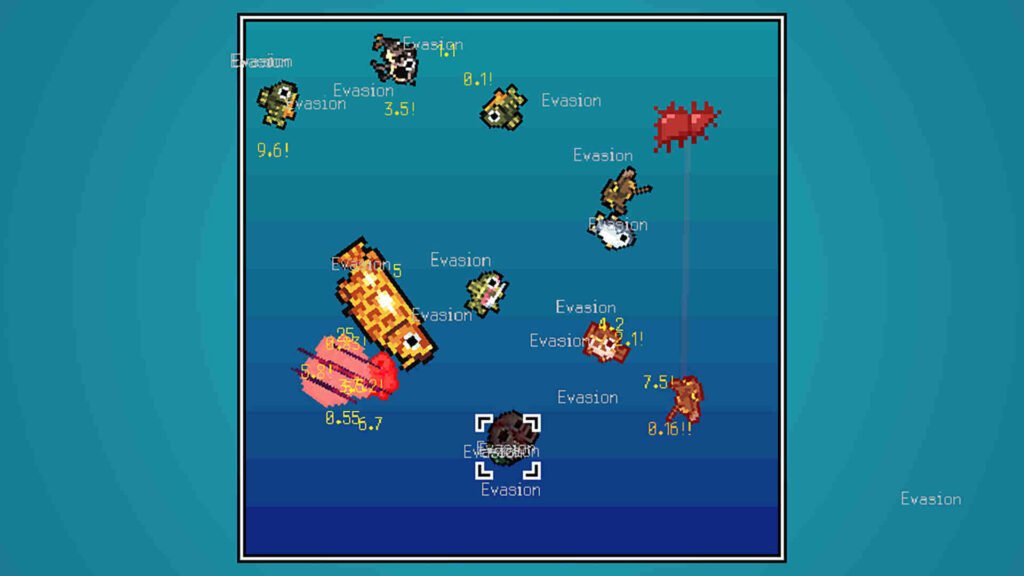
The basic task is to collect fish by moving the cursor over them in time with the music. Different tools help gather larger numbers, and the player gradually gains access to more ways of collecting. The challenge is not simply to click as quickly as possible; it is to understand how the tools work and use them effectively as the screen becomes busier.
Collected fish contribute to the game’s progression. Money and upgrades allow the laboratory and its equipment to expand, creating a cycle of collecting, improving, and collecting more. The lab grows as the player advances, making progress visible rather than hiding it behind menus alone.
Fish Lab is not a traditional fishing simulator. Its focus is on incremental growth, collecting, and managing tools, rather than casting a line or pursuing realistic fish behavior. Rehaunted
Key Features

Large Schools of Fish
The game can display up to 100,000 fish on screen, creating a distinctive sense of scale. The fish are not just decoration: collecting them is the core activity, and the growing crowd helps communicate how far the player has progressed.
Music-Synced Collection
The collection mechanic is connected to the soundtrack. Players move the cursor over fish in rhythm, giving the central activity a musical quality rather than making it feel like an ordinary idle counter.
Tools and Power Choices
A range of tools helps collect fish. Players can decide which tools receive additional power, adding a light strategic layer to the otherwise straightforward process. Choosing where to invest power can shape how the collection develops.
Laboratory Growth
The lab expands as the game progresses. This visible growth gives upgrades a clear purpose: the player is not only increasing numbers, but also watching the laboratory become more substantial over time.
Research and Upgrade Tree
The game includes more than 200 upgrades in its technology tree. Players can also write grants to unlock major equipment improvements. These systems provide longer-term goals beyond collecting fish during an individual session.
Additional Modes
Fish Lab includes Sandbox and Endless modes for players who want to approach the game in different ways. It also has a Zen mode that can be installed as a Windows screensaver, making the fish-filled display useful as a relaxed desktop visual.
Progression and Upgrades
Progression is built around repeated improvement. Early on, the player learns the collection mechanic and begins unlocking useful tools. As the lab develops, decisions about equipment and power become more important because different upgrades can affect how efficiently fish are gathered.
The technology tree gives players many upgrades to work toward, while grants provide another route to major equipment improvements. This structure is intended for people who enjoy incremental games: the satisfaction comes from seeing a small starting setup turn into a much larger operation.
Graphics and Sound
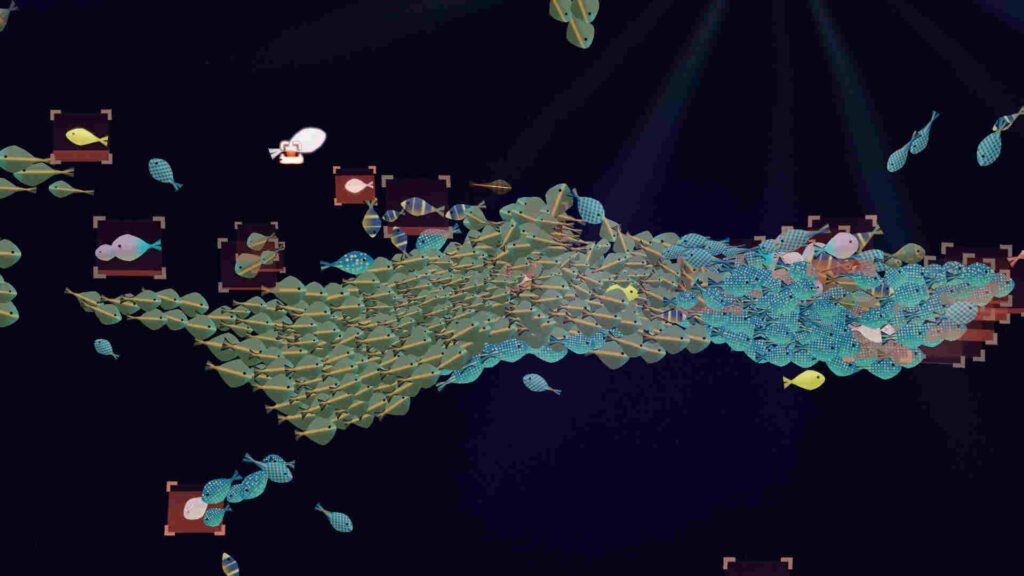
Fish Lab uses a colorful, minimalist visual style that keeps attention on the movement of the fish and the growth of the laboratory. Its appeal comes less from detailed scenery and more from the spectacle of large groups of fish moving across the screen.
Music is central to the experience rather than simply background accompaniment. The collection mechanic is synced to the soundtrack, and the developer states that the music was made by hand. Together, the visuals and rhythm give the game a distinctive identity among incremental titles.
Game Modes
The main experience focuses on collecting fish and developing the lab, but additional modes offer alternatives.
- Sandbox: A mode for a more open-ended approach.
- Endless: A mode for continuing the collection experience.
- Zen: A calmer presentation that can be installed as a Windows screensaver.
These options make the game more flexible for players who want either a progression-focused session or something more relaxed on their desktop.
Release Date and Availability

Fish Lab was released on September 14, 2026, for PC. It is developed and published by stonecodes and is available through Steam. A demo is also listed, so players can try the game before deciding whether to purchase the full version.
Is Fish Lab Worth Playing?
Fish Lab may appeal to players who enjoy incremental games, collection mechanics, and watching a small system expand over time. Its music-synced interaction and huge number of on-screen fish give it a recognizable hook, while the upgrade tree and equipment choices provide goals beyond the basic collection loop.
It is a more focused experience than a full aquarium-management or simulation game. Players looking for a detailed story, realistic fish care, or a large world to explore may want something different. Those interested in a short, unusual incremental game may find its combination of rhythm, collecting, and visible growth appealing.
Final Thoughts
Fish Lab builds its experience around one clear idea: collect fish in time with music and use that progress to grow a laboratory. Its large on-screen schools, equipment upgrades, technology tree, and extra modes add variety to that central loop without turning it into a complicated management simulation.
For players who enjoy incremental games and colorful, music-driven interactions, it offers a distinctive take on collecting and progression. Its appeal is in watching the lab grow—and seeing just how much a simple idea can expand.