
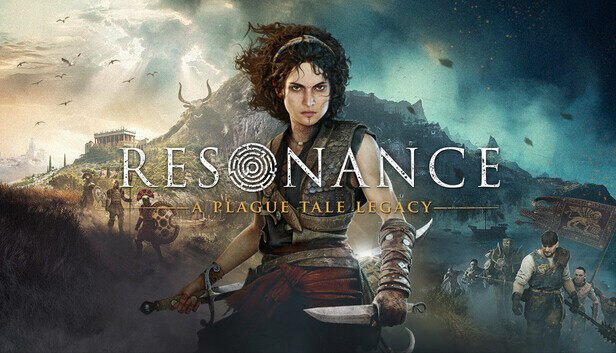
Resonance: A Plague Tale Legacy takes the world of A Plague Tale in a completely new direction while still keeping the dark atmosphere, emotional storytelling, and historical fantasy elements that made the series popular. Instead of continuing the story of Amicia and Hugo, this adventure travels back in time and introduces players to Sophia, a young and fearless plunderer whose search for answers takes her to a mysterious island surrounded by ancient legends.
Developed by Asobo Studio and published by Focus Entertainment, Resonance: A Plague Tale Legacy was released on August 27, 2026, for PC, PlayStation 5, and Xbox Series X|S. The game is set 15 years before A Plague Tale: Requiem and presents an original story centered around Sophia’s journey to the legendary Minotaur’s Island. There she encounters deadly enemies, ancient secrets, environmental puzzles, and a terrifying creature connected to a devastating curse.
Game Information
- Title: Resonance: A Plague Tale Legacy
- Developer: Asobo Studio
- Publisher: Focus Entertainment
- Release Date: August 27, 2026
- Genre: Action, Adventure
- Game Mode: Single-player
- Platform: PC, PlayStation 5, Xbox Series X|S
- Perspective: Third-person
- Setting: Medieval Mediterranean / Minoan-inspired island
- PC Storage: 75 GB
- DirectX: Version 12
What Is Resonance: A Plague Tale Legacy About?
Resonance is a prequel adventure set 15 years before the events of A Plague Tale: Requiem. The protagonist is Sophia, a young plunderer who has been drawn toward the mysterious Minotaur’s Island since childhood. Her curiosity eventually becomes a dangerous expedition when she travels to the island and begins uncovering secrets connected to her past.
The island is not simply an archaeological location waiting to be explored. It contains dangerous trails, ancient ruins, hidden mechanisms, hostile forces, and a mythical creature associated with a powerful curse. Sophia has to survive these dangers while also staying ahead of an army pursuing her. As the adventure continues, the mythology surrounding the island becomes increasingly difficult to separate from reality.
The result is a story that mixes historical inspiration with supernatural mystery. Players are encouraged to explore the island not only to survive but also to understand why Sophia was drawn there and what the ancient legends really mean.
Story and Setting
The story takes place around the Mediterranean and connects the medieval world with elements inspired by the ancient Minoan era. This creates a setting that feels different from the familiar locations of A Plague Tale: Innocence and A Plague Tale: Requiem.
Sophia’s journey is deeply connected to the Minotaur’s Island. The island has a long history of legends and secrets, and its ruins become an important part of the adventure. As Sophia moves deeper into the environment, she encounters evidence of an ancient mystery that has remained hidden for generations. Big Ambitions
The developers use this setting to create a mixture of historical atmosphere and mythology. Ancient architecture, underground locations, dangerous paths, and mysterious symbols all contribute to the feeling that Sophia is uncovering something that was never meant to be found.
Sophia
Sophia is the central character of Resonance: A Plague Tale Legacy and represents a significant change from the protagonists of the previous games. She is introduced as a fierce young plunderer who is accustomed to danger and determined to discover the truth about her past.
Her personality also influences the gameplay. Sophia is more capable in direct combat than the protagonists of the previous games, and sword fighting becomes an important part of her survival. At the same time, she still needs to rely on intelligence, exploration, stealth, and environmental interactions when dealing with dangerous situations.
Her journey is not simply about treasure. The deeper she travels into the island, the more personal the mystery becomes. The connection between her past, the island, and the supernatural events gradually forms the emotional foundation of the story.
Gameplay
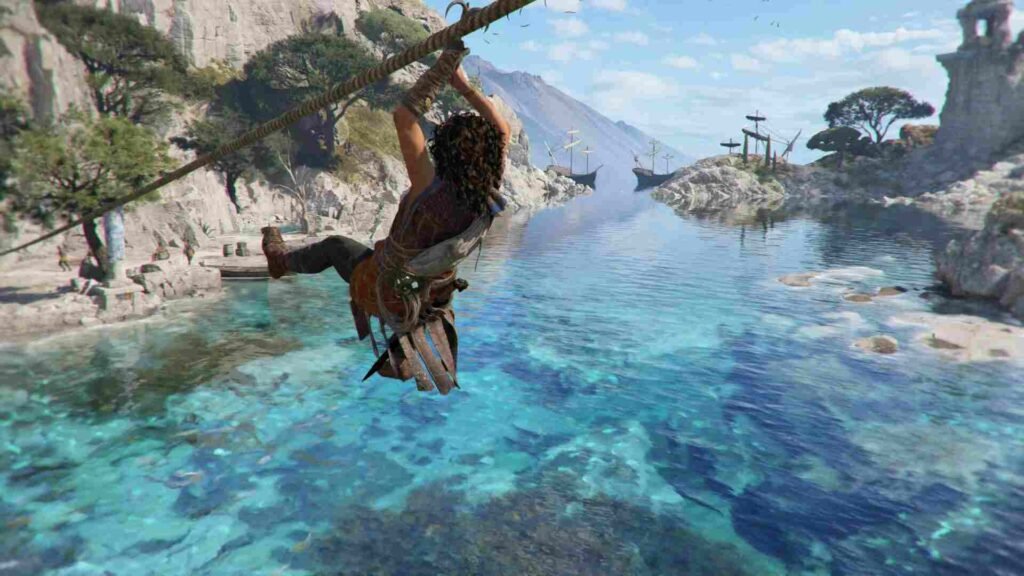
Resonance: A Plague Tale Legacy combines several gameplay styles. Exploration allows players to travel through dangerous island environments, while combat gives Sophia a more direct way of dealing with enemies. Environmental puzzles and stealth provide alternatives when simply fighting is not the best option.
The game follows a primarily linear structure, but many areas contain optional paths where players can discover upgrades, collectibles, and additional rewards. This approach gives the adventure a cinematic flow while still giving curious players reasons to investigate their surroundings.
The gameplay is therefore more action-oriented than the earlier A Plague Tale titles. Sword combat plays a much bigger role, but the game still maintains moments where observation, timing, and environmental awareness are more useful than simply attacking everything in sight.
Sword Combat
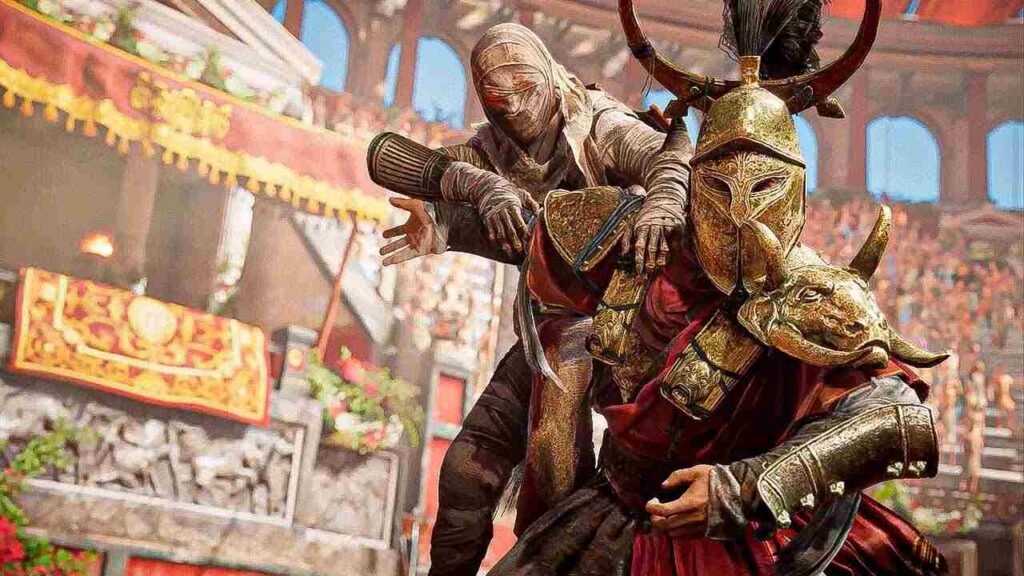
One of the biggest changes in Resonance is its emphasis on melee combat. Sophia uses a sword to defend herself against hostile enemies, creating a combat system based around attacks, defense, timing, and positioning.
Combat encounters require players to pay attention to enemy movements rather than simply attacking continuously. Parrying can be used to counter incoming attacks, while stagger mechanics give players opportunities to break an opponent’s momentum.
The environment can also become part of combat. Enemies can potentially be pushed or kicked into dangerous areas, allowing players to use the surroundings to their advantage rather than depending entirely on their weapon.
This makes combat feel more physical and immediate than the stealth-focused encounters found throughout much of the earlier series.
Exploration
Exploration is a major part of Sophia’s journey. The Minotaur’s Island contains ancient ruins, underground areas, dangerous trails, and hidden locations that encourage players to look beyond the obvious route.
Although the main path is structured, optional areas provide additional rewards and collectibles. These exploration opportunities can help Sophia discover upgrades and other useful items while also expanding the player’s understanding of the island.
The environment itself is an important storytelling tool. Ancient structures and abandoned locations suggest that Sophia is walking through a place with a history much larger than what she initially understands.
Environmental Puzzles
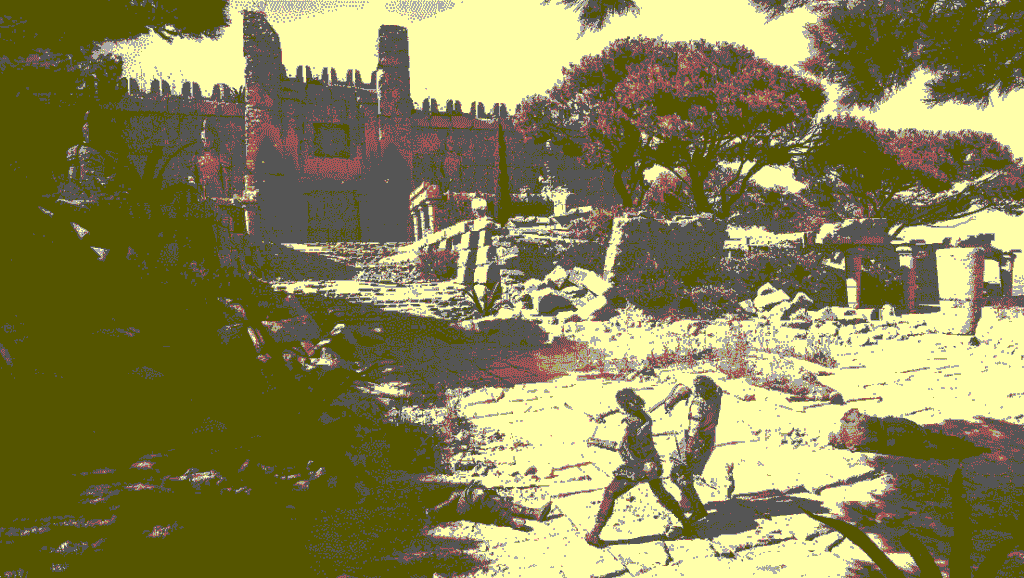
Puzzles are another important part of the adventure. Several sections require Sophia to manipulate the environment, interpret symbols, and understand how different mechanisms work.
Some puzzles are connected to light and ancient ruins, creating situations where players must carefully examine their surroundings before they can continue. These moments provide a break from combat and help reinforce the archaeological and mythological themes of the island.
The puzzles also contribute to the atmosphere because they make the ancient ruins feel like places that were designed with purpose rather than simply being decorative backgrounds.
Stealth
Although combat receives greater attention in Resonance, stealth is still part of the experience. There are situations where confronting every enemy directly is unnecessary or dangerous, making careful movement a useful alternative.
Stealth becomes particularly important during sections where Sophia is being pursued or when the environment contains overwhelming numbers of enemies. Instead of treating every encounter as a traditional combat arena, the game sometimes encourages players to observe enemy positions and find a safer route.
This combination of combat and stealth gives players some flexibility in how they approach dangerous areas.
The Minotaur’s Island
The island is effectively another character in the story. It is filled with mysteries, ruins, hidden paths, and evidence of an ancient civilization and its mythology.
Sophia’s childhood fascination with the island gives the setting a personal importance. She is not arriving there randomly; she has been drawn toward it for years, making the expedition part of a much larger search for identity and truth.
As the player explores deeper, the island becomes increasingly threatening. What initially appears to be an adventure involving treasure and ancient secrets gradually turns into something much darker.
Mythology and the Creature
The Minotaur is at the center of the game’s mythology, but Resonance does not simply present the legendary creature as a familiar monster from ancient stories. Instead, the game builds mystery around the creature and its connection to the island’s curse.
The official description explains that Sophia eventually confronts a mythical creature hidden behind the island’s legend. This supernatural threat becomes one of the most important mysteries of the adventure.
This approach allows the game to combine historical inspiration with horror. The deeper Sophia travels into the island, the more the line between legend and reality begins to disappear.
Visual Design

Resonance: A Plague Tale Legacy uses detailed third-person environments to create an atmospheric Mediterranean world. The island’s ruins, forests, underground locations, coastal areas, and ancient structures provide a variety of visual environments.
The game places significant attention on character presentation and environmental lighting. The result is a world that can look beautiful one moment and threatening the next.
This contrast is important because the game is not designed as constant horror. There are moments of exploration and beauty, but they exist alongside dangerous locations and supernatural threats.
My Personal Experience
The most interesting aspect of Resonance is the way it expands the A Plague Tale universe without simply repeating the formula of the previous games. Sophia is a different type of protagonist, and her combat abilities make the moment-to-moment gameplay more aggressive.
The sword combat gives encounters more physicality, especially when parrying and stagger mechanics become important. At the same time, stealth and environmental puzzles prevent the game from becoming a straightforward hack-and-slash adventure.
The island itself provides much of the atmosphere. Exploring ancient ruins while trying to understand the mythology creates a feeling similar to a historical treasure hunt, but the supernatural elements gradually make the experience more unsettling.
For fans of the series, the biggest attraction is probably the opportunity to see another side of the world before the events of the previous games. For newcomers, the game can also work as an accessible standalone adventure because its story follows Sophia and introduces a new mystery.
Multiplayer – Is Resonance: A Plague Tale Legacy Multiplayer?
No. Resonance: A Plague Tale Legacy is a single-player game. The Steam listing identifies it as a single-player narrative adventure and does not list online multiplayer or cooperative gameplay.
The entire campaign is designed around Sophia’s journey, meaning players experience the combat, puzzles, exploration, and story alone.
Platform Availability
Resonance: A Plague Tale Legacy is available on PC, PlayStation 5, and Xbox Series X|S. The PC version is available through Steam, Epic Games Store, and the Microsoft Store. It was also released day one through PC Game Pass and Xbox Game Pass Ultimate.
The game is designed for current-generation hardware, with its PC requirements asking for a relatively modern processor, 16 GB of RAM, a dedicated graphics card, and an SSD.
System Requirements
Minimum Requirements
- OS: Windows 10/11 64-bit
- Processor: AMD Ryzen 3 3100 / Intel Core i3-12100
- Memory: 16 GB RAM
- Graphics: AMD Radeon RX 5500 XT / NVIDIA GeForce GTX 1060 with 6 GB VRAM
- DirectX: Version 12
- Storage: 75 GB
- Additional: SSD required; CPU with 4 cores / 8 threads; DX12.1 / Shader Model 6.6 capable GPU required
- Target: 1080p, Low preset, 30 FPS
Recommended Requirements
- OS: Windows 10/11 64-bit
- Processor: AMD Ryzen 5 5600X / Intel Core i5-12400F
- Memory: 16 GB RAM
- Graphics: AMD Radeon RX 6700 XT / NVIDIA GeForce RTX 3060 Ti with 8 GB VRAM
- DirectX: Version 12
- Storage: 75 GB
- Additional: SSD required; CPU with 4 cores / 8 threads; DX12.1 / Shader Model 6.6 capable GPU required
- Target: 1080p, Ultra preset, 60 FPS
Pros and Cons
Pros
Resonance has a strong atmosphere and a visually interesting setting. The Minotaur’s Island gives the adventure a distinctive identity, while the combination of historical environments and supernatural mythology creates plenty of mystery.
The sword combat is another advantage for players who want more direct action than previous A Plague Tale games offered. Parrying, stagger mechanics, environmental interactions, and stealth provide variety instead of relying on one combat style.
The story also benefits from Sophia’s personal connection to the island. Her search for answers gives the exploration a purpose beyond simply reaching the end of a level.
Cons
Players expecting the exact stealth-focused gameplay of A Plague Tale: Innocence or Requiem may be surprised by the stronger emphasis on melee combat.
The linear structure can also limit the sense of freedom compared with a fully open-world adventure. Although optional paths and exploration areas exist, the overall campaign remains carefully directed.
The PC hardware requirements are another consideration. The game requires 16 GB RAM at minimum and recommends a relatively modern GPU for 1080p Ultra at 60 FPS.
Latest Update and Current Status
Resonance: A Plague Tale Legacy launched on August 27, 2026. The current Steam version has received a Very Positive reception, with the store showing 92% positive English reviews at the time of checking.
The game’s official Steam community also highlighted its launch and continued to share information about the adventure, including its combat, exploration, environmental puzzles, and narrative-focused design.
As a newly released title, Resonance is now positioned as a new standalone chapter in the wider A Plague Tale universe rather than simply another continuation of the previous protagonists’ story.
Should You Play Resonance: A Plague Tale Legacy?
Resonance: A Plague Tale Legacy is a strong option for players who enjoy cinematic action-adventure games with mystery, exploration, puzzles, and supernatural elements. Its biggest difference from the previous A Plague Tale games is the stronger focus on sword combat.
Sophia’s abilities make the adventure feel more active, while stealth and environmental puzzles prevent the gameplay from becoming repetitive. The Minotaur’s Island also provides an unusual setting that combines Mediterranean history with ancient mythology.
Fans of A Plague Tale will likely appreciate the opportunity to explore a new period of the universe, while newcomers can approach Resonance as a separate story centered around a new protagonist.
Conclusion
Resonance: A Plague Tale Legacy expands the A Plague Tale universe with a new protagonist, a new historical setting, and a much stronger emphasis on action. Set 15 years before A Plague Tale: Requiem, the game follows Sophia as she travels to the mysterious Minotaur’s Island in search of answers about her past.
The adventure combines sword combat, parrying, stealth, exploration, environmental puzzles, and cinematic storytelling. Ancient ruins and Mediterranean environments provide the foundation for a story that gradually moves from historical mystery toward supernatural horror.
Sophia’s combat abilities make this entry feel different from the previous games, but the series’ atmospheric storytelling remains an important part of the experience. The mysterious island, the ancient mythology, and the terrifying creature connected to its curse give players plenty of reasons to continue exploring.