
Pizza House Simulator is a first-person restaurant management game that puts you behind the counter of a struggling pizzeria on the beautiful Amalfi Coast. Instead of simply preparing pizzas and watching customers leave, the game gives you control over almost every part of the business. You have to prepare ingredients, stretch dough, manage ovens, serve customers, repair equipment, improve the kitchen, and make enough money to turn a small family restaurant into a successful Italian restaurant empire.
Developed by Broken Lyre Entertainment and Wendigo Games and published by Devotion Interactive, Pizza House Simulator was officially released on August 19, 2026. The game can be played alone or with friends through online co-op for up to six players. Its design mixes cooking simulation, business management, customization, resource management, and comedy, so a normal restaurant shift can quickly become much more complicated than expected.
Game Overview
Pizza House Simulator gives you the responsibility of taking a family pizzeria and turning it into a profitable business. The restaurant is located in a Mediterranean setting inspired by the Amalfi Coast, giving the game a warmer and more relaxed atmosphere than many traditional management simulators.
The peaceful surroundings do not necessarily mean that running the restaurant will be relaxing. Once customers start arriving, you need to prepare orders quickly and make sure the kitchen continues operating properly. Ingredients need to be available, cooking stations need to work, and finished pizzas need to reach customers before they become frustrated.
The game combines these immediate restaurant tasks with longer-term business decisions. You can upgrade equipment, automate parts of the kitchen, hire assistants, customize the restaurant, and use financial systems to expand the business.
Gameplay
The core gameplay begins in the kitchen. Preparing pizza involves several steps, including handling ingredients, stretching dough, adding toppings, managing the oven, and eventually serving the finished order. Each step becomes more important when the restaurant gets busy.
At first, the workload is manageable because the restaurant is small and there are fewer customers. As your business develops, however, the number of orders and responsibilities increases. This is where organization becomes just as important as cooking skill.
A kitchen that is badly organized can create unnecessary delays. You may have ingredients in the wrong place, equipment that needs repair, or too many orders waiting at the same time. Good restaurant management therefore means thinking ahead instead of simply reacting to every customer. Yet Another Zombie Survivors
Running a Busy Restaurant
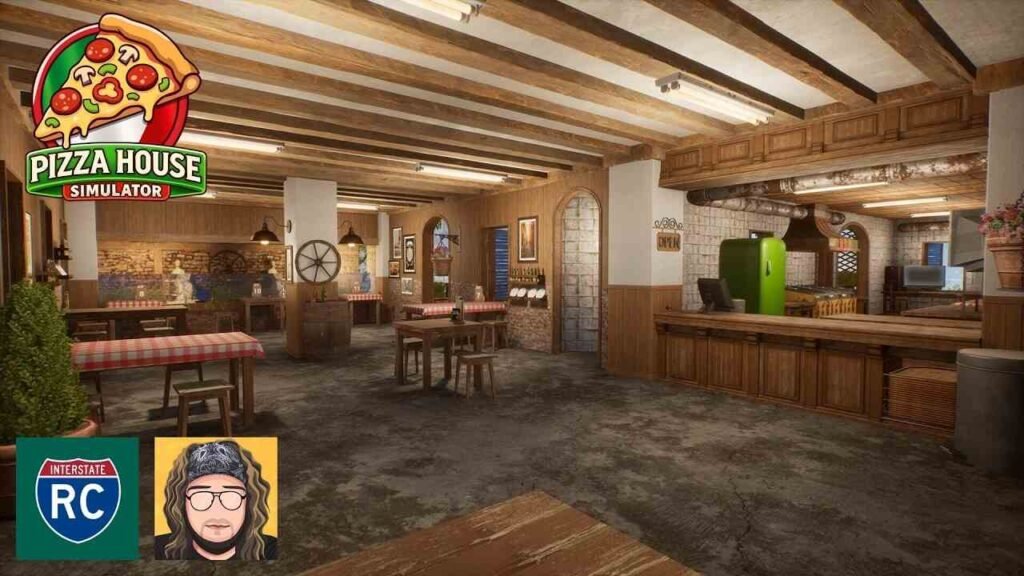
The restaurant’s busiest moments are where Pizza House Simulator becomes most entertaining. During a dinner rush, several customers can arrive with different expectations while your kitchen is already dealing with other problems.
An oven might need attention at the worst possible moment. A cooking station can break down, forcing you to repair it while orders continue arriving. Customers may become impatient if they have to wait too long.
These situations make each shift feel less predictable. The objective is not simply to produce pizzas as quickly as possible but to keep the entire restaurant functioning.
Kitchen Upgrades and Automation
One of the most useful progression systems is kitchen improvement. Your early restaurant is limited, so you need to invest your earnings carefully. Better equipment can improve efficiency and help you handle more customers.
Automation becomes particularly valuable as the restaurant grows. Instead of personally managing every small task, you can introduce systems and assistants that take some pressure away from you.
This changes the feeling of the game over time. In the beginning, you are essentially working inside your own small restaurant. Later, you are managing a much larger operation where equipment, employees, and automation systems work together.
Restaurant Customization
Pizza House Simulator is not only about efficiency. You can also customize the appearance and style of your restaurant.
As you progress, you can unlock decorations, equipment, upgrades, buffs, and other customization options. This means that players can decide what kind of restaurant they want to create rather than simply following one fixed layout.
You could aim for a small and comfortable family pizzeria or gradually transform the location into a more luxurious Italian restaurant. The customization system gives progression a visual reward as well as a practical one.
This is useful because restaurant-management games can sometimes become focused entirely on numbers. Here, your progress can also be seen in the environment around you.
Business and Economy
The business side of Pizza House Simulator goes beyond simply selling pizzas. The game includes an economy system where ingredient prices can change, and players can pay attention to economic news before making financial decisions.
You can take loans from the bank and invest in the stock market. Radio broadcasts and local newspapers can provide information that may help you understand what is happening in the economy.
This creates an unusual layer for a cooking game. For example, changes affecting ingredient suppliers can influence your restaurant costs. A situation that initially looks negative for the restaurant could potentially create another opportunity if you understand how the market is changing.
A Living Italian Town
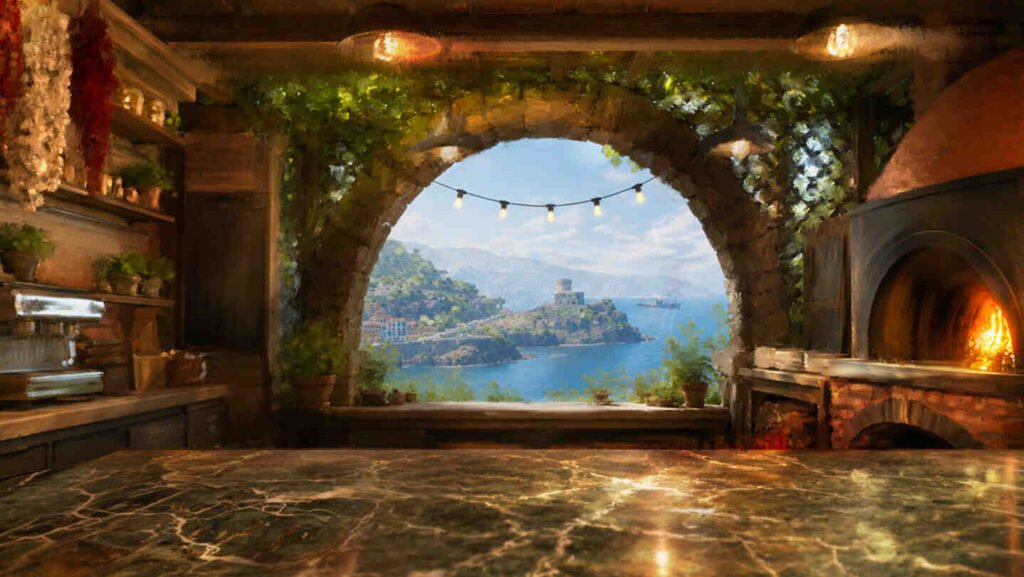
The Amalfi Coast setting is one of the game’s visual highlights. The developers have designed the surrounding town as more than a simple background for the restaurant.
Pizza House Simulator includes a dynamic day and night cycle, along with seasonal weather. Players can experience sunny periods, rainy evenings, foggy mornings, and snowy winters.
Weather and environmental changes can contribute to the atmosphere of the restaurant and help make different shifts feel less repetitive. The developers also describe random events, changing customer behavior, economic crises, and unexpected disasters as part of the wider business simulation.
Chaos and Unexpected Problems
Pizza House Simulator does not take the restaurant business completely seriously. Alongside ordinary management problems, the game can throw much stranger situations at you.
Fires, thieves, mafia incidents, equipment failures, and other unexpected disasters can interfere with your plans. This means that even if you have carefully prepared your restaurant, a shift can still go wrong.
These events are important because they stop the management system from becoming too predictable. If every shift followed the same pattern, the game could quickly become repetitive. Unexpected problems force you to react and sometimes make difficult choices.
My Personal Experience
What I find most interesting about Pizza House Simulator is the way it combines small tasks with bigger business decisions. Making a pizza sounds simple, but once you have multiple customers waiting, equipment problems, employees moving around, and financial decisions to consider, the restaurant can become surprisingly difficult to manage.
The first part of the game feels more personal because you are directly involved in almost everything. You prepare food, deal with customers, and keep the kitchen moving. As the business grows, however, the focus gradually shifts toward management.
I particularly like this kind of progression because it gives your restaurant a sense of development. You are not simply unlocking stronger equipment for the sake of numbers. You are building a more efficient workplace.
Multiplayer Experience
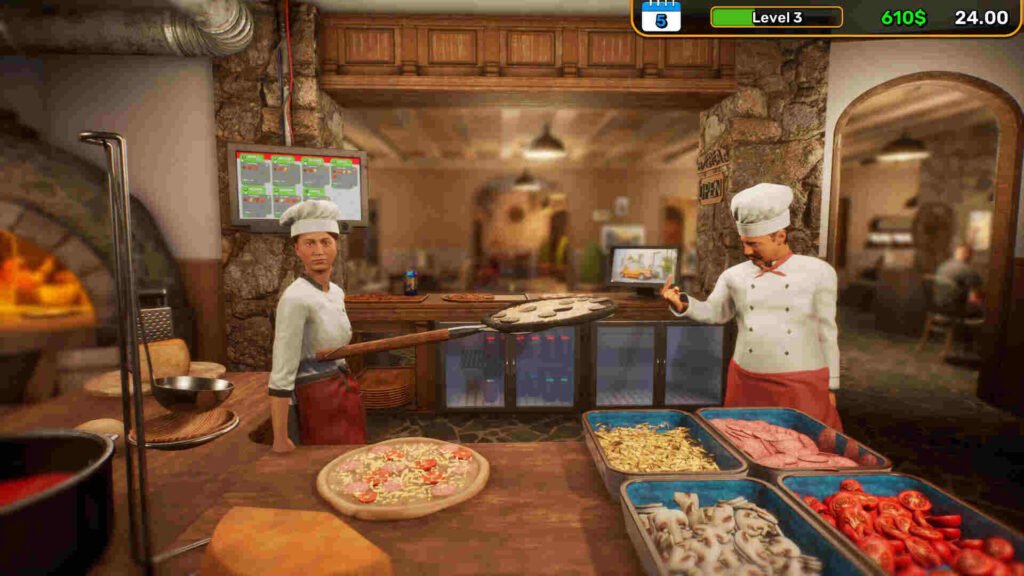
Pizza House Simulator supports online co-op for up to six players. You can therefore run the restaurant together with friends instead of handling every responsibility alone.
Co-op fits the game naturally because the restaurant contains several different tasks. One player can focus more on cooking while another deals with customers or other responsibilities. As the restaurant becomes larger, dividing the workload can make a significant difference.
However, multiplayer does not necessarily make the game easier in every situation. More players can also create more activity and more opportunities for confusion. When everyone is working toward the same goal, communication becomes important.
The developers have also included community-focused features such as Twitch integration, allowing viewers to participate in the restaurant experience and potentially create additional chaos during streams.
Game Analysis
Pizza House Simulator stands out because it does not limit itself to the usual restaurant-management formula. Many cooking games focus mainly on preparing orders quickly, while management games often focus heavily on menus, finances, and statistics. This game attempts to combine both sides.
The first-person perspective also makes the experience more hands-on. Instead of simply clicking a button to complete a kitchen task, you are more directly involved in the restaurant environment.
The progression system is another strength. Starting with a struggling family business gives your upgrades a clear purpose. You are not simply trying to increase a number; you are trying to create a restaurant that can handle more customers and earn more money.
The economic systems add another layer for players who enjoy management. Loans, stocks, ingredient prices, and economic news can make financial decisions more interesting than simply saving money until you can afford the next upgrade.
Pros and Cons
Pros
- Hands-on first-person cooking gameplay
- Restaurant management and business progression
- Online co-op for up to six players
- Kitchen automation
- Employee management
- Restaurant customization
- Dynamic day and night cycle
- Seasonal weather
- Economic and stock-market systems
- Random disasters and unexpected events
- Amalfi Coast setting
- Supports both solo and multiplayer play
Cons
- Busy shifts can become chaotic
- Financial systems may be more complicated than expected
- Disasters can interrupt carefully planned sessions
- Players looking for a purely relaxing cooking game may find it stressful
- Multiplayer is dependent on having other players to enjoy the co-op experience fully
System Requirements
Minimum Requirements
- OS: Windows 10 64-bit
- Processor: Intel Core i5-2500K / AMD FX-8350
- RAM: 8 GB
- Graphics: NVIDIA GeForce GTX 750 Ti / AMD Radeon R7 260X
- DirectX: Version 11
- Storage: 5 GB
- Sound Card: DirectX-compatible sound card
- Architecture: 64-bit processor and operating system
Recommended Requirements
- OS: Windows 10/11 64-bit
- Processor: Intel Core i5-8400 / AMD Ryzen 5 2600
- RAM: 16 GB
- Graphics: NVIDIA GeForce GTX 1060 6GB / AMD Radeon RX 580
- DirectX: Version 11
- Storage: 5 GB
- Sound Card: DirectX-compatible sound card
- Architecture: 64-bit processor and operating system
Is Pizza House Simulator Multiplayer?
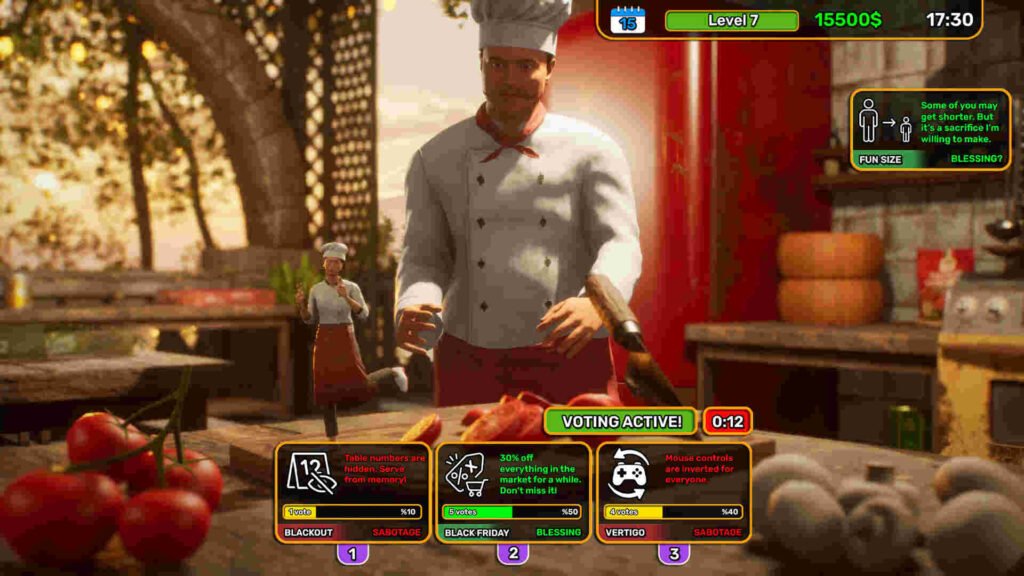
Yes. Pizza House Simulator supports online cooperative multiplayer for up to six players. You can also play the entire restaurant-management experience alone.
The co-op mode is particularly useful because different players can share restaurant responsibilities. Instead of one person handling every cooking and management task, a group can divide the workload and try to keep the pizzeria running during busy periods.
Can You Play Pizza House Simulator Solo?
Yes. The game is designed to support single-player as well as online co-op. Solo players can manage their restaurant themselves and progress through the game’s systems without needing a multiplayer group.
Playing alone can actually make the management side more noticeable because you have to handle more responsibilities yourself. This can make the restaurant feel more demanding, especially as the business becomes larger.
Is Pizza House Simulator Worth Playing?
Pizza House Simulator is worth considering if you enjoy cooking games but want something with more depth than simply preparing food. Its combination of hands-on kitchen work, restaurant customization, employee management, automation, economics, and unpredictable events gives it a much broader gameplay loop.
The game is also a strong option for players who enjoy co-op simulation games. Six-player online support means a group of friends can work together and experience the restaurant’s chaotic shifts as a team.
However, it is important to understand that this is not purely a relaxing restaurant game. Fires, thieves, equipment failures, economic changes, impatient customers, and other events can turn a normal shift into a difficult situation.
How to Download Pizza House Simulator on PC
The safest way to download Pizza House Simulator on PC is through an official digital storefront such as Steam or the Epic Games Store. The game was released for PC on August 19, 2026, and is officially available through those platforms.
After purchasing the game, install it through your official game library and allow the platform to download the latest version. This is especially useful because the developers have already released post-launch updates addressing staff behavior, multiplayer fixes, save persistence, shared ingredients, and other issues.
Avoid unofficial installers or modified versions. Besides potential security problems, unofficial copies may not contain the latest updates and can cause problems with online multiplayer.
Should You Play It?
If you like restaurant simulators but want more freedom and unpredictability, Pizza House Simulator is an interesting choice. The game gives you plenty of small tasks to perform while also encouraging you to think about the long-term future of your business.
The cooking mechanics give you something hands-on to do, while automation and employee systems provide a natural reason to keep upgrading. The economic systems make money management more interesting, and the customization options allow your restaurant to gradually develop its own identity.
The multiplayer mode is another major advantage. Six-player co-op makes the game suitable for groups who enjoy simulation games where everyone has a job to perform. At the same time, solo support means you do not need a group to experience the main progression.
Conclusion
Pizza House Simulator takes the familiar dream of owning a small Italian pizzeria and turns it into a much larger management experience. You are not only making pizzas. You are building a business, managing employees, upgrading equipment, watching the economy, dealing with customers, customizing the restaurant, and responding to whatever problems appear during a shift.
Its Amalfi Coast setting gives the game a warm and attractive atmosphere, while the changing weather and day-night cycle help make the world feel more alive. The business systems add depth beyond the kitchen, and the unpredictable disasters keep the restaurant from becoming completely routine.