
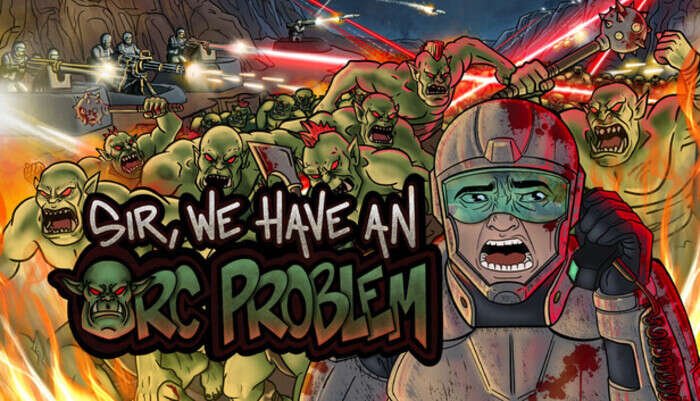
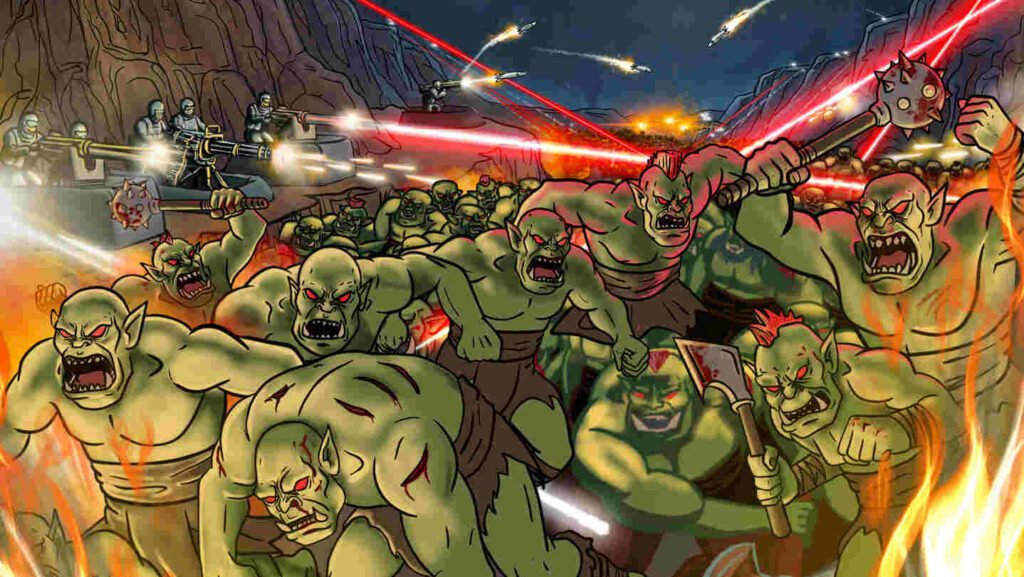
Some tower defense games give you a small group of enemies to deal with. Sir, We Have an Orc Problem does the complete opposite. Here, you’re dealing with huge waves of orcs that keep coming toward your base, and your job is to stop them with turrets, bombs, lasers, and other powerful tools.
The game mixes tower defense with incremental progression, roguelite ideas, and physics-based battles. Instead of worrying about a few enemies at a time, you’ll eventually watch thousands of orcs moving across the battlefield.
The Main Idea
Orcs will move toward your defenses in large numbers. You place turrets in useful positions and upgrade them as you earn resources.
The challenge comes from deciding where your defenses should go and which upgrades will give you the most value.
The game doesn’t require complicated controls. Most of the strategy comes from building a strong defense and knowing when to use your special abilities.
Gameplay
You begin a level by placing your available turrets. Once the orcs start arriving, your defenses automatically attack them.
As enemies are defeated, you earn resources that can be used for upgrades. Better turrets can deal more damage, attack faster, or help you handle larger groups.
The number of enemies can become enormous. The developers describe waves containing tens of thousands of troops, which is one of the main ideas behind the game.
This creates some impressive moments when your defenses begin destroying huge groups at once.
Build the Right Defense
You don’t want to put every defense in one random location. Instead, you need to think about where the orcs are coming from and how you can make them spend more time inside your attack range.
As you progress, you’ll have access to more upgrades and stronger defensive options.
A good setup can turn an overwhelming enemy wave into a complete disaster for the orcs.
This makes experimenting with different layouts one of the more enjoyable parts of the game.
Huge Upgrade Tree
Resources earned from your runs can be used to unlock and improve powerful turrets. This means that even if a particular attempt doesn’t go perfectly, you can still make progress toward becoming stronger.
The upgrade system gives you a reason to keep playing.
You can try a different strategy, improve your defenses, and return to a difficult level with a stronger setup.
Bombs, Lasers, and More
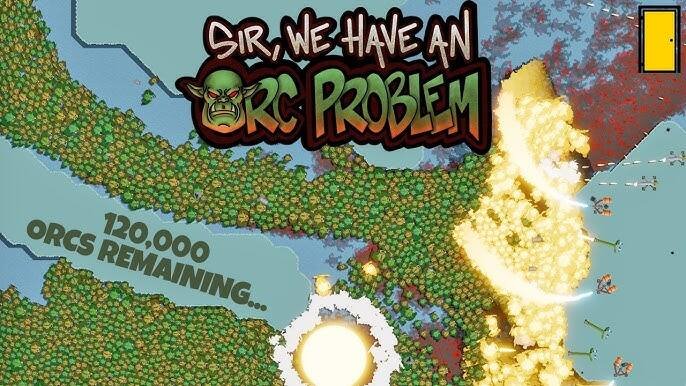
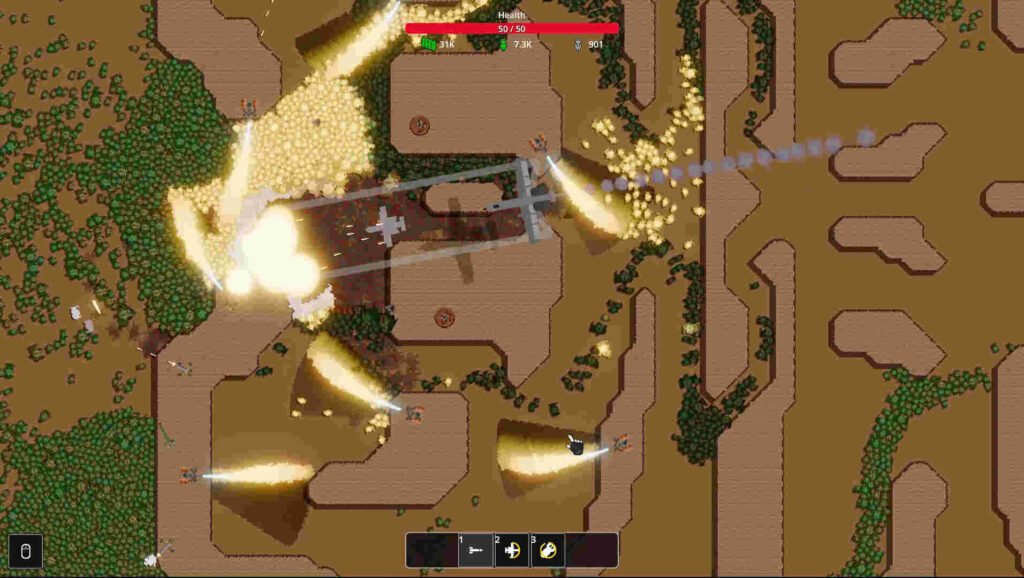
The game also gives you active abilities that can help when things get out of control. These include powerful options such as strafing runs, orbital lasers, and even nuclear attacks.
Timing these abilities can make a big difference.
Using a powerful attack too early may waste it, while waiting too long can allow the orcs to reach your defenses. Pass the Fear
That small decision adds another layer to the otherwise simple gameplay.
Physics Make the Battles Fun
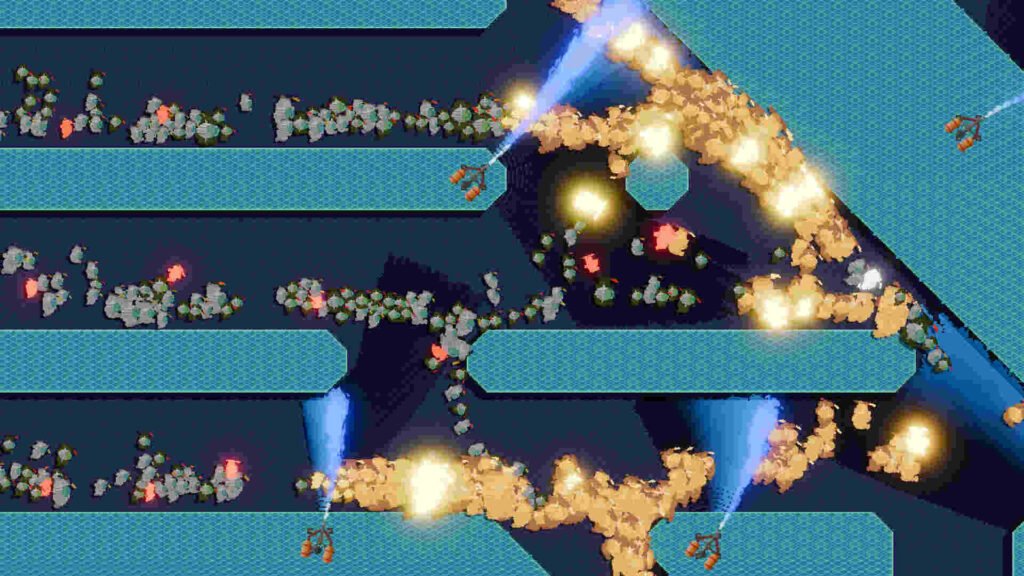
With thousands of enemies moving together, the battlefield can look more like a moving crowd than a normal tower defense game. Orcs can bunch together at important points, creating perfect targets for powerful attacks.
Watching a huge group get hit by a bombing run or laser can be extremely satisfying.
The physics also make the battles feel less predictable than a standard tower defense game.
Things I Liked
You don’t need to spend hours learning complicated systems before you can have fun. The basic concept is immediately clear: build defenses and stop the orcs.
But there is enough progression underneath that simple idea to keep you interested.
I also like the scale of the battles. Seeing huge numbers of enemies on the screen gives the game a different feeling from traditional tower defense titles.
The active abilities are another nice touch because they let you directly influence a difficult battle instead of simply watching your towers work.
Graphics and Sound
The game uses a colorful 2D visual style with a top-down view.
The graphics aren’t trying to compete with large AAA games, but that actually works well for this type of game. You can easily see your towers, enemies, and important areas of the battlefield.
The large groups of orcs are the main visual attraction. Watching them move together toward your defenses makes the scale of each attack easy to understand.
My Personal Experience
What I like about Sir, We Have an Orc Problem is that it doesn’t try to make tower defense more complicated than it needs to be.
The fun comes from seeing your setup work. You place a few defenses, watch the first enemies arrive, and then slowly improve your system until it can handle much larger waves.
I also like the idea of having resources carry over between runs. Even when a level doesn’t go exactly as planned, you can use what you’ve earned to improve your future attempts.
System Requirements
Minimum
- Operating System: Windows 10 or later
- Processor: Modern x64 processor
- Memory: 4 GB RAM
- Graphics: Dedicated or integrated graphics capable of running modern 2D games
- Storage: Around 2 GB available space
Recommended
- Operating System: Windows 10/11
- Processor: Modern multi-core processor
- Memory: 8 GB RAM
- Graphics: Dedicated graphics card
- Storage: SSD with available space
The exact PC requirements should be checked on the current store listing before installation, especially because large numbers of enemies can put extra load on the system.
Is It Worth Playing?
If you enjoy tower defense games and like watching huge groups of enemies get destroyed, Sir, We Have an Orc Problem is definitely worth checking out.
The game keeps its basic mechanics easy to understand while adding enough upgrades and abilities to give you reasons to continue.
Its short format is also useful for players who don’t want a tower defense game that takes dozens of hours to finish. The developers previously described the full game as roughly 4–6 hours of content.
Final Thoughts
Sir, We Have an Orc Problem takes a very simple idea and pushes it to an entertaining extreme. Instead of defending against a handful of enemies, you’re trying to survive enormous armies of orcs. Turrets, upgrades, bombs, lasers, and other abilities give you the tools needed to handle the growing threat.
The physics-based crowds and large enemy numbers give the game its own personality, while the progression system keeps you coming back to improve your defenses.