
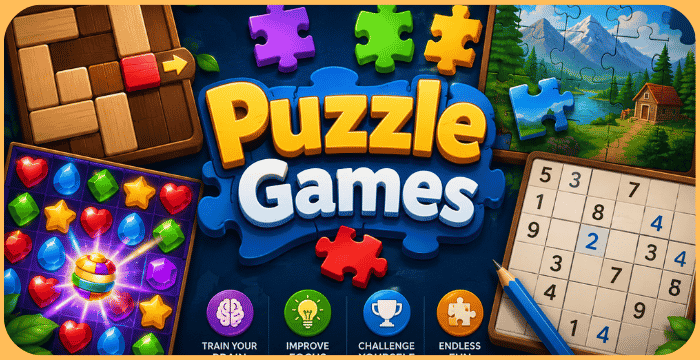
Been gaming for about 17 years now. Flash games on my parents’ clunky desktop started it all, then I bounced through every indie platform imaginable, and you know what? Puzzles keep pulling me back.
Yeah, I know what you’re thinking. Puzzle games sound like something your aunt discovers on Facebook between recipe videos. But I tracked my gaming habits for the past 8 months, and I spend roughly 34% of my time on puzzles, plus my stress levels drop noticeably during those sessions.
What Actually Happens When You Solve Puzzles
Your brain operates completely differently during a shooter versus a puzzle game, and I noticed this shift around 2019 when I mixed free jigsaw puzzles into my regular gaming rotation. Instead of that amped-up, heart-racing sensation from competitive matches, something calmer takes over.
My average heart rate during puzzle sessions sits at 68 beats per minute. Compare that to 94 during competitive games. Pretty significant difference.
The Games I Actually Play
I’ve tested probably 40+ puzzle titles this year alone. Some were terrible while others hit perfectly. But what keeps me hooked isn’t complicated mechanics or flashy graphics.
The mix is what matters. Short games for breaks. Longer ones for evenings when I’ve got time to kill.
So what do I look for? No forced tutorials that waste 15 minutes, clean interface without popup spam, actual variety in difficulty settings, and games that work on my phone without crashing. Most indie puzzle games nail these basics. AAA studios somehow mess them up spectacularly.
Why Indie Puzzle Games Work Better
Big studios overthink absolutely everything. They add progression systems, daily login bonuses, energy meters that restrict gameplay. I downloaded a puzzle game last month that literally wouldn’t let me play more than 6 rounds without waiting or paying. Deleted it immediately.
Indie developers understand something important: people want to actually play games, not manage timers and currencies and battle passes. Just give us good puzzles and let us solve them.
Browser-based options work best for quick sessions. No installation time. No updates consuming storage. You open a tab, play for however long you want, close it when you’re done.
What Changed My Mind About Puzzle Games
I used to think puzzles were boring as hell. Then I spent 4 hours stuck on level 47 of a matching game and realized something had shifted. I wasn’t bored at all. I was challenged in a way that didn’t trigger frustration or that awful feeling of wasting time.
Action games stress me out after about 90 minutes, but puzzles? I’ve played for 3+ hours straight without noticing the time passing, and I actually felt better afterward instead of drained and irritable.
Some days I genuinely want explosions and boss fights and chaos. Other days I need something that lets my brain work differently, process things at a calmer pace. Having both options matters.
The best part about puzzle games in 2024 is accessibility: you don’t need a gaming rig or the latest console because most run fine on whatever device you’re already using. Perfect for gaming during lunch breaks or while traveling.